
How to Elope in Glacier National Park 2026
Glacier National Park
Permits, locations, timing, and every practical step to get married in the most dramatic landscape in Montana, just the two of you.
Eloping in Glacier National Park is simpler than most couples expect, but it is not a turn-up-and-marry situation. The park protects these places carefully, which means a few rules, one permit, and some real planning. Do that part right and you get the rest: a sunrise on a ridgeline, vows by a glacial lake, and a day that belongs entirely to the two of you.
I am a Glacier National Park elopement photographer based in Kalispell, and I help couples through this process constantly. This is the whole thing, start to finish, written the way I would explain it to you over coffee. Work through the ten steps below in order and you will have a real plan, not a pile of browser tabs. If you would rather hand the logistics to someone who does this every week, that is what my Glacier elopement photography is built around.
Why elope in Glacier
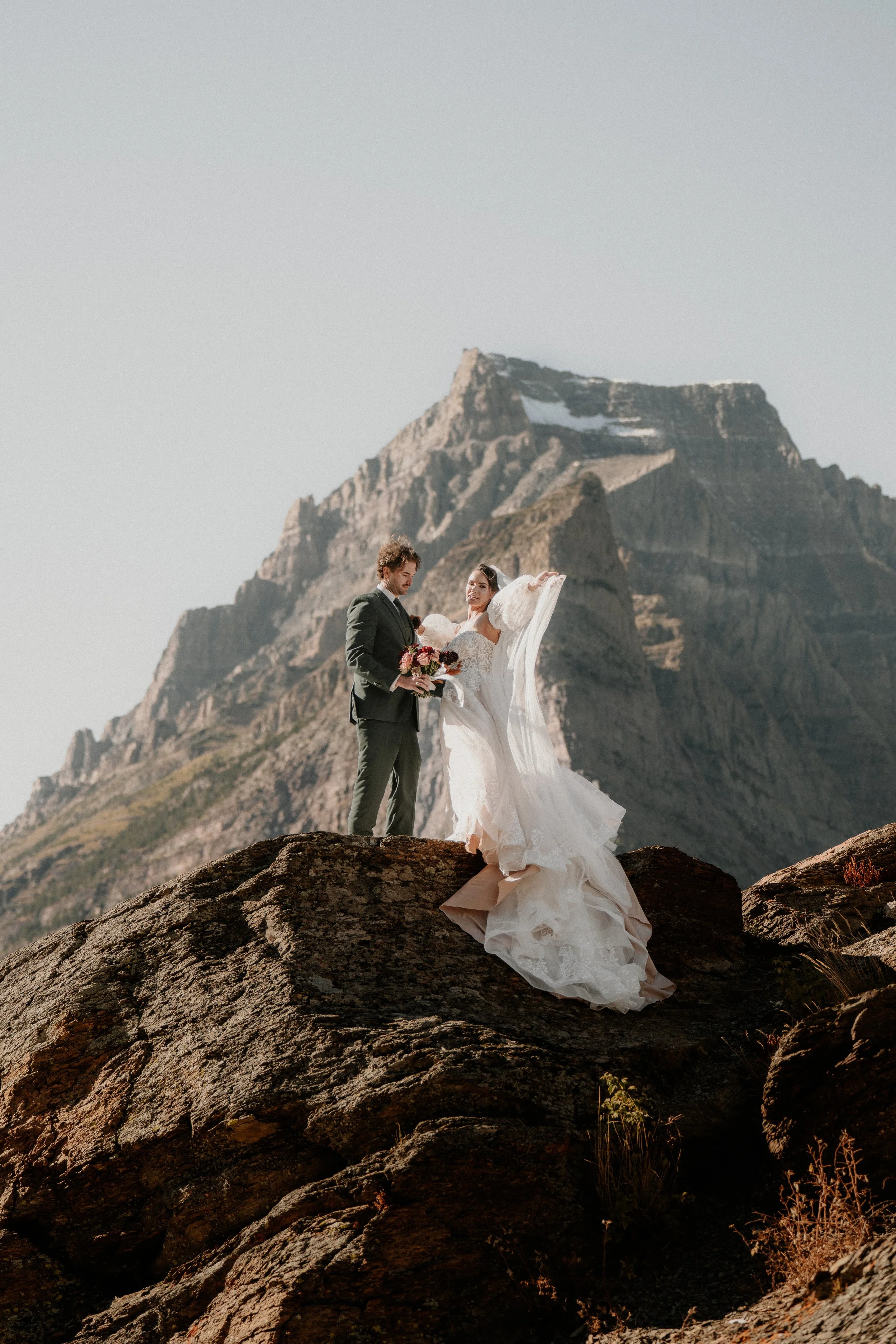
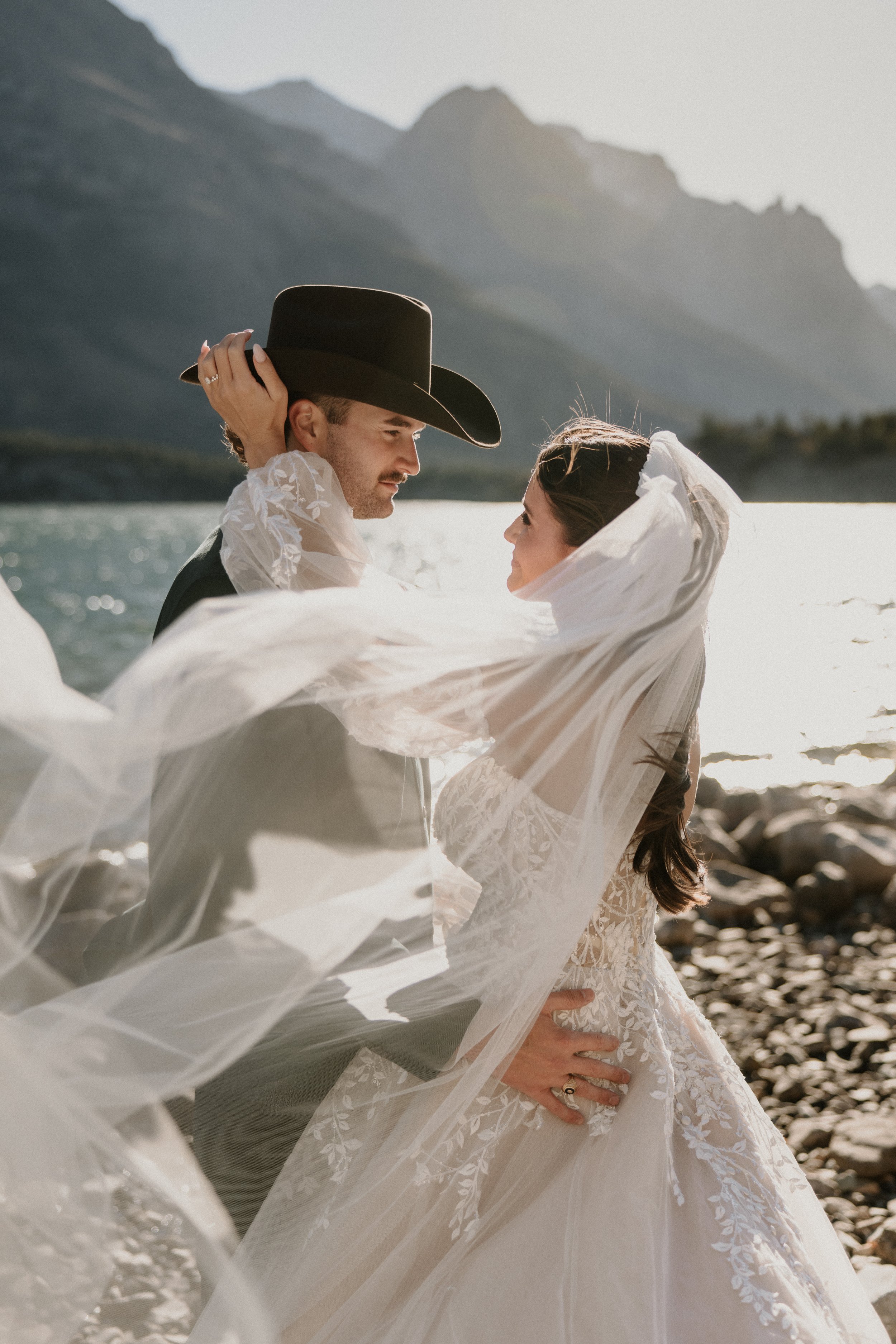
Glacier is the rare park that works for almost every kind of couple. You can have a true backcountry adventure with a hike to an alpine lake, or pull off Going-to-the-Sun Road and exchange vows ten minutes from the car. Towering peaks, glacier-fed lakes, larch trees that turn gold in fall: the backdrops do a lot of the work.
Eloping also sidesteps the parts of a big wedding that drain you. No seating chart, no two hundred guests, no day that runs on everyone else's schedule. Just the ceremony that matters and the place you chose. Most couples spend the money they save on the experience instead: a longer trip, a great meal, photography that actually lasts.
An elopement here can still include people. Several sites hold 15 to 30 guests, and the amphitheaters hold far more. Eloping does not have to mean only the two of you, it means the day is built around you.
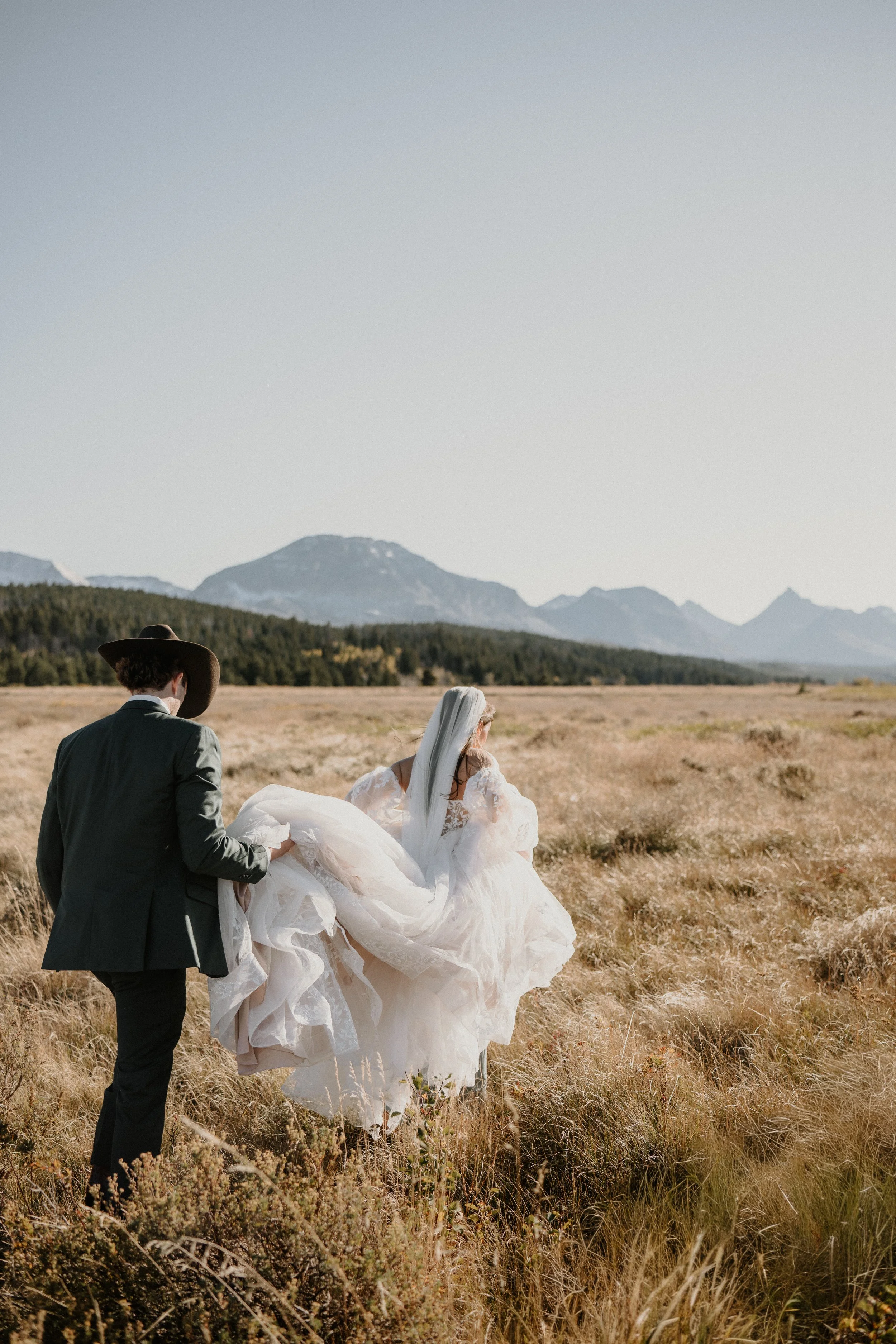
Get your Special Use Permit
This is the one non-negotiable. Every wedding or elopement ceremony inside Glacier requires a Special Use Permit from the National Park Service, regardless of group size. Vow exchanges, ring exchanges, even a "mock" ceremony all count. If you are saying words to each other to mark a marriage, you need the permit.
What it costs and how long it takes
- The application fee is $125, paid to the National Park Service through Pay.gov. It is non-refundable.
- Apply at least 20 business days before your date. You can apply up to one year ahead, and you should, because locations and times are first-come, first-served and the park gets hundreds of requests a year.
- Be specific on the form: exact location name, exact time of day, full guest and vehicle counts, and your photographer's contact info.
- A general answer like "Apgar" or "morning" gets rejected. You need the precise ceremony site, for example "Fish Creek Picnic Area Shoreline."
Once it is approved, you will get a draft permit to review and sign, then a final signed copy. Print it and have it with you on the day. Your permit also acts as your vehicle reservation for that location, though you still need a regular park entrance pass.
Choosing the location and time is the step couples get stuck on, because light and crowds change everything. Talk it through with your photographer before you submit. It is the single biggest reason people bring me in early.
Need a hand with the whole application? Walking couples through the permit, the timing, and the right site is part of how I photograph Glacier elopements and weddings.
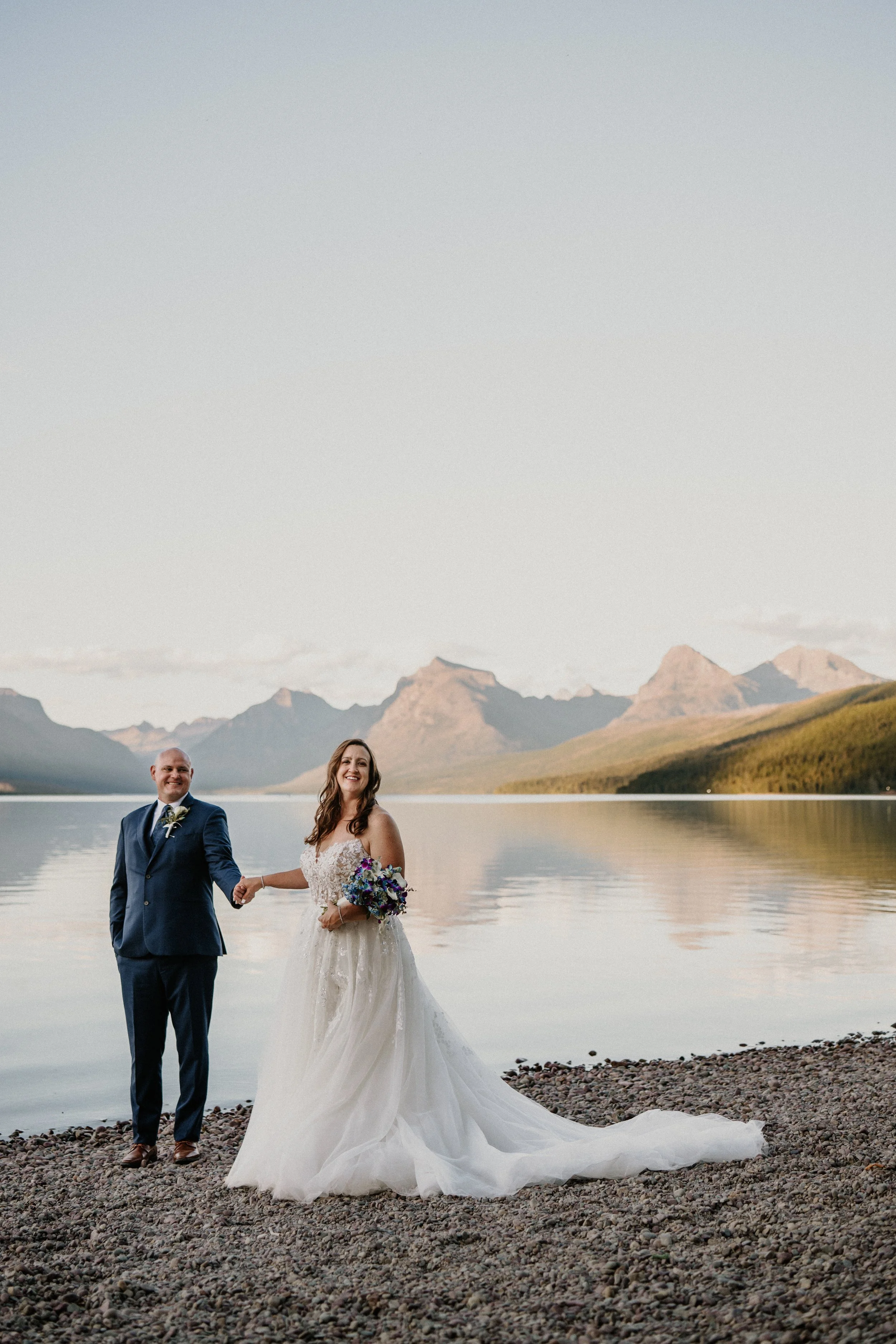
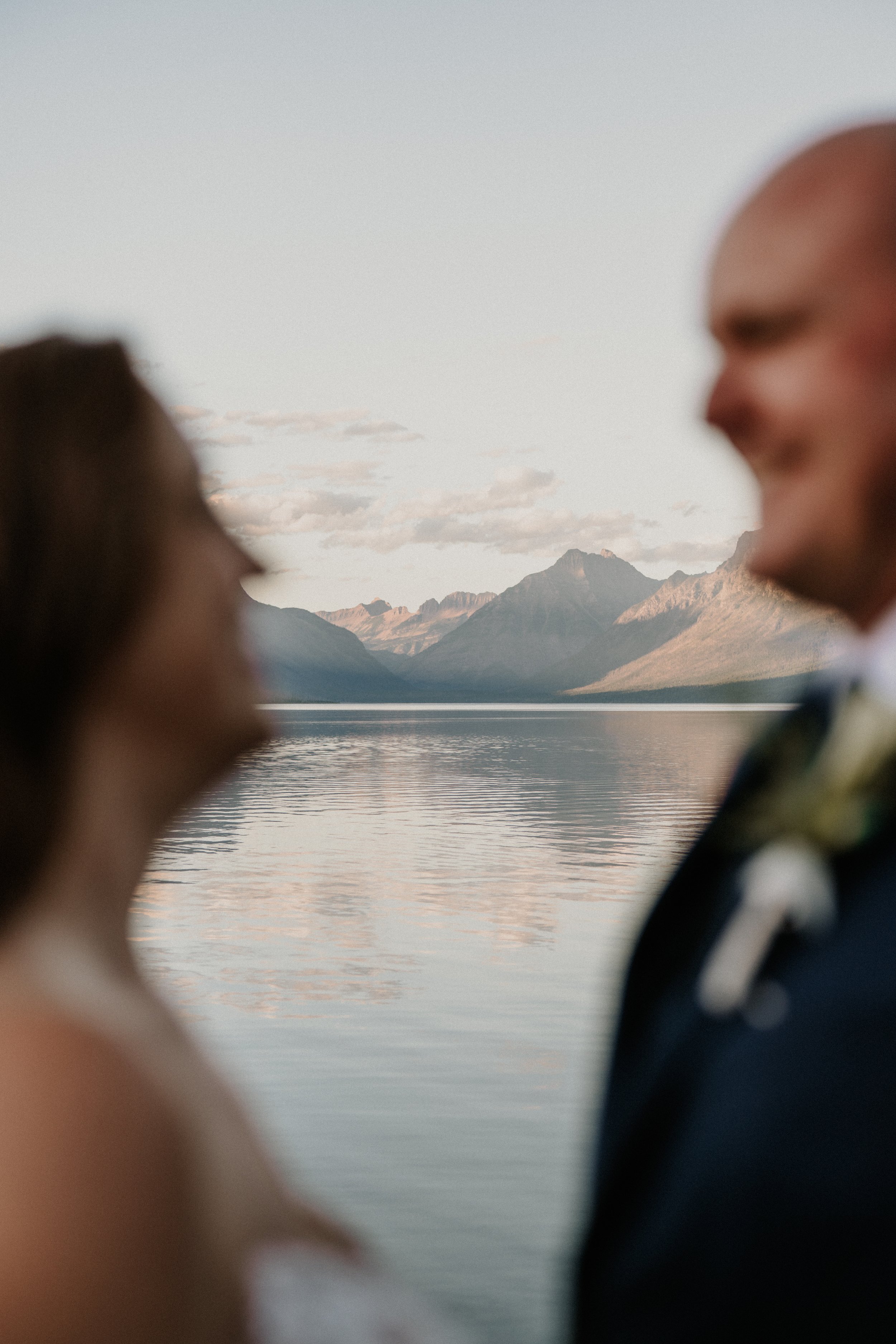
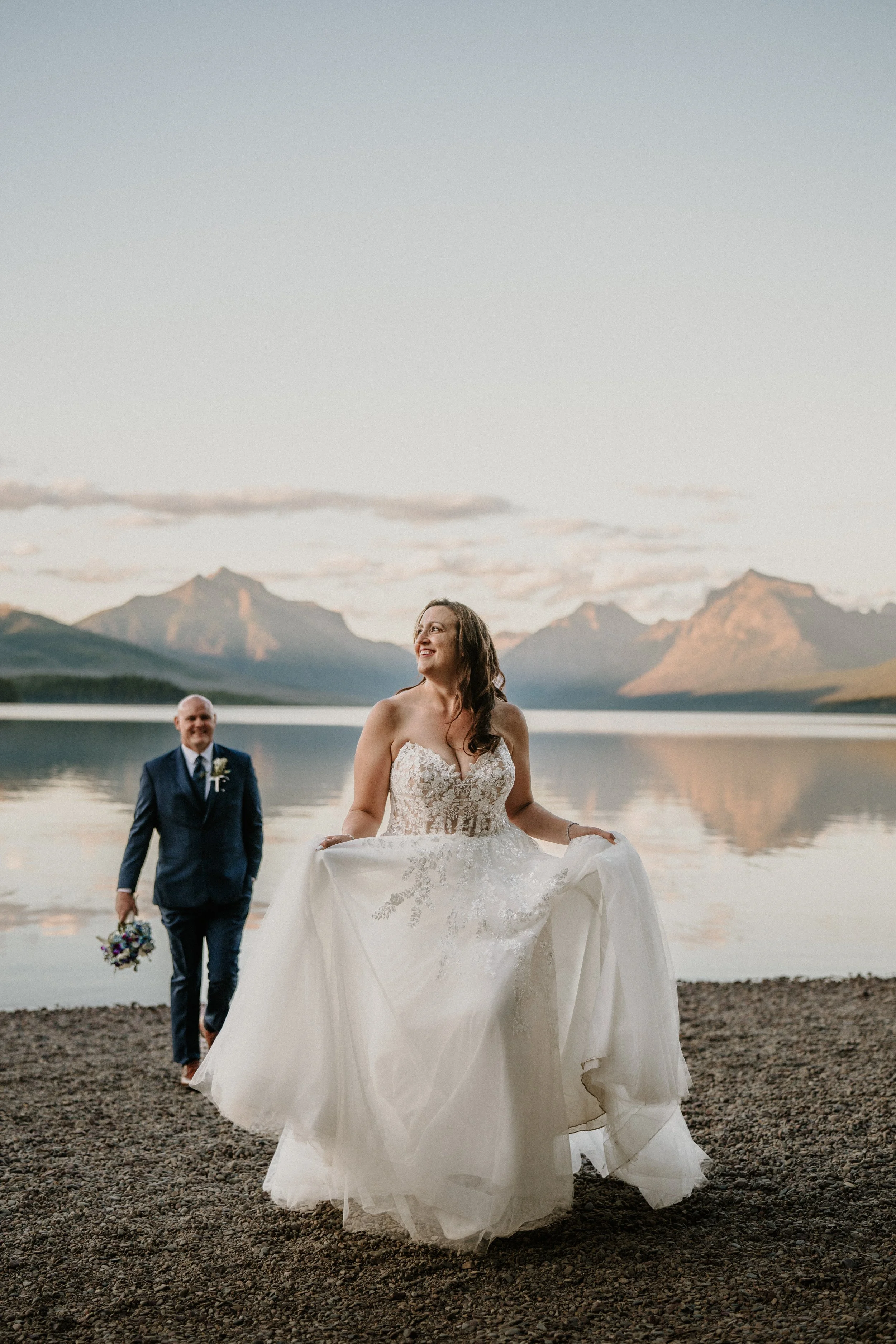
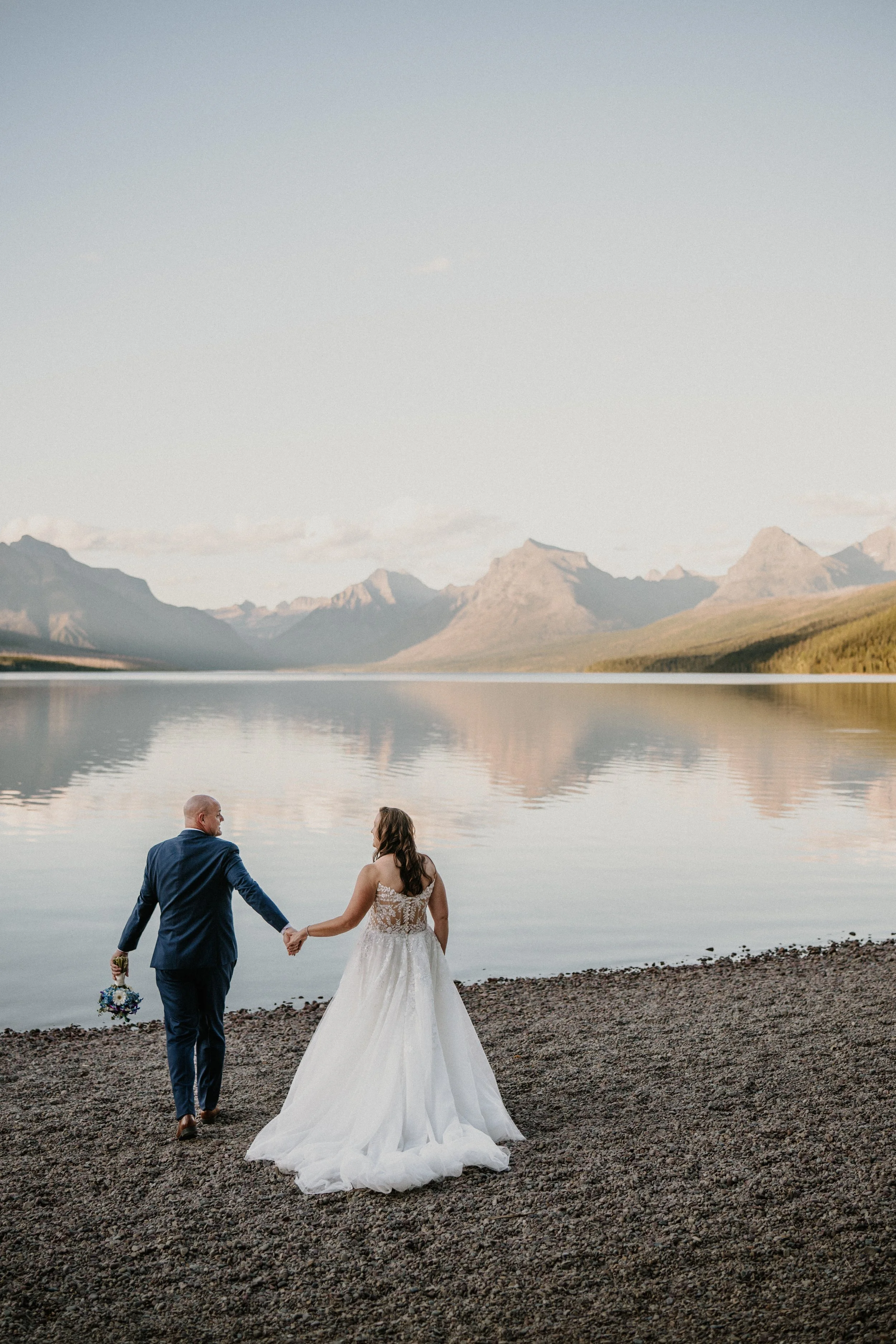
Get your marriage license
The permit lets you hold the ceremony. The marriage license is what makes it legal, and it is a separate thing handled by the county, not the park.
- The nearest courthouse to the west side of the park is in Kalispell, the Flathead County seat. Apply there in person.
- Bring a driver's license or birth certificate for proof of age. Both of you must be present.
- Montana allows self-solemnization, which means you can legally marry yourselves with no officiant required. You also do not strictly need witnesses, though many couples like having one.
If you want an officiant anyway, plan on roughly $300 to $500 in the Flathead Valley. Either way, sort the license before your ceremony date so the day itself is just the two of you and the mountains.
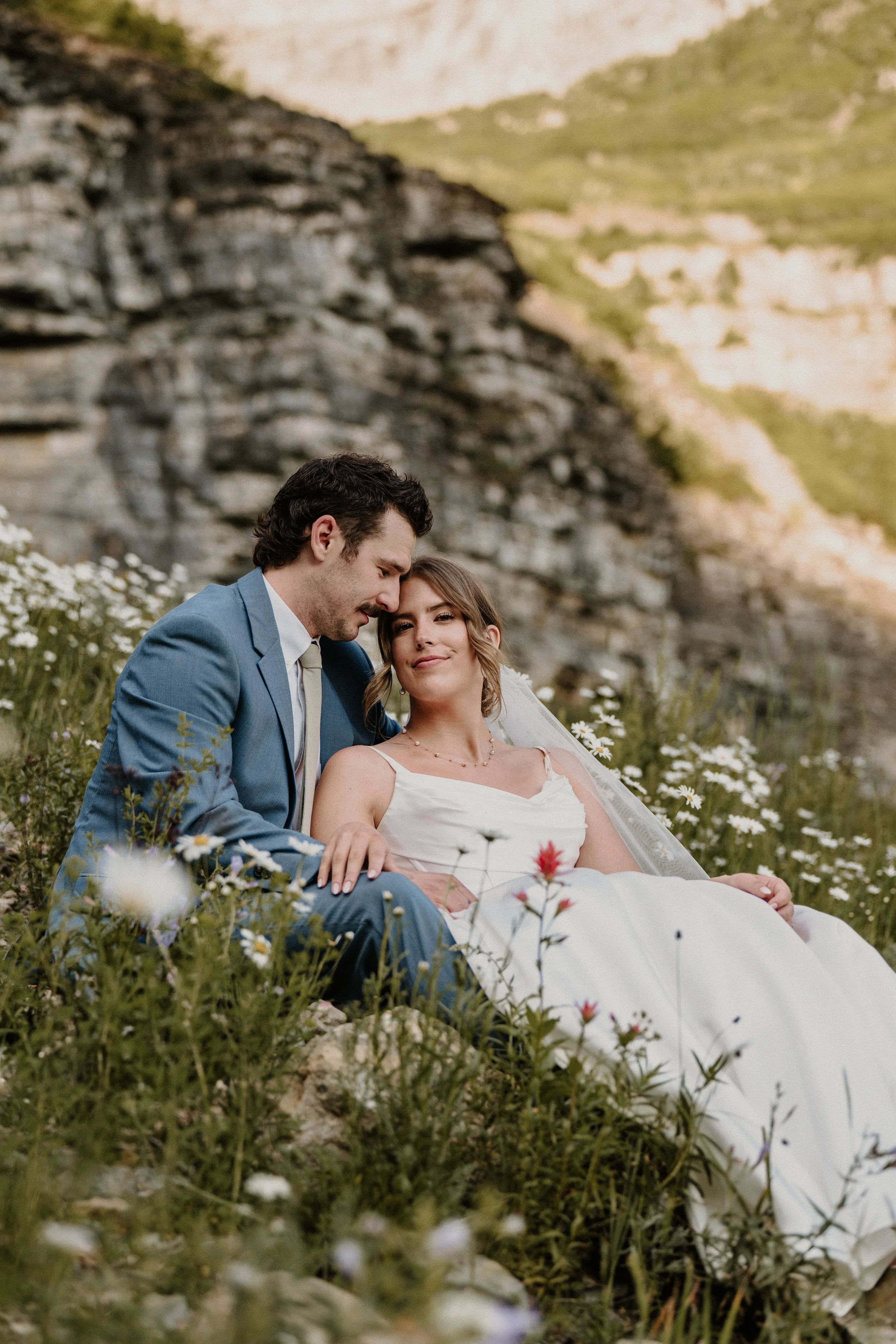
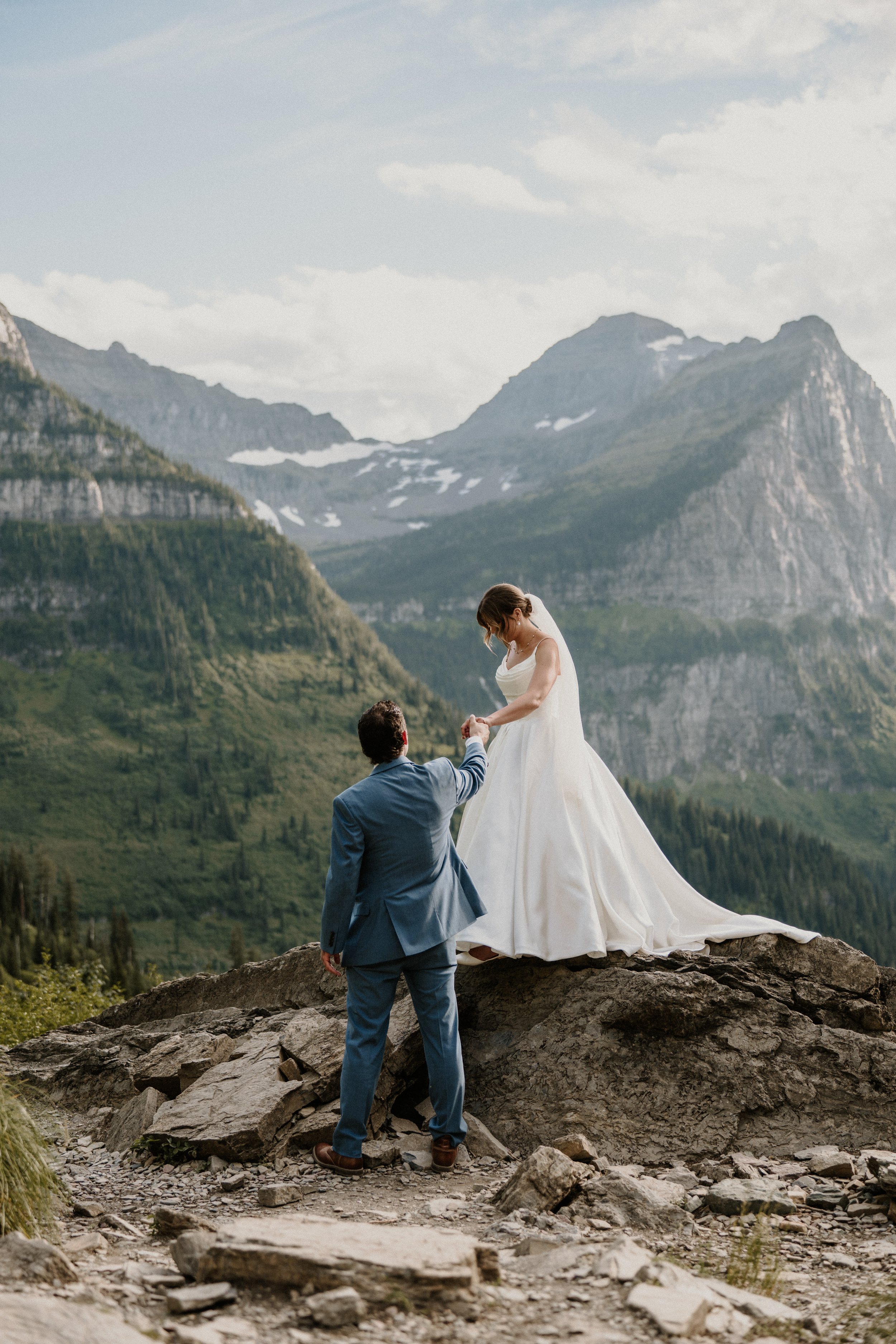
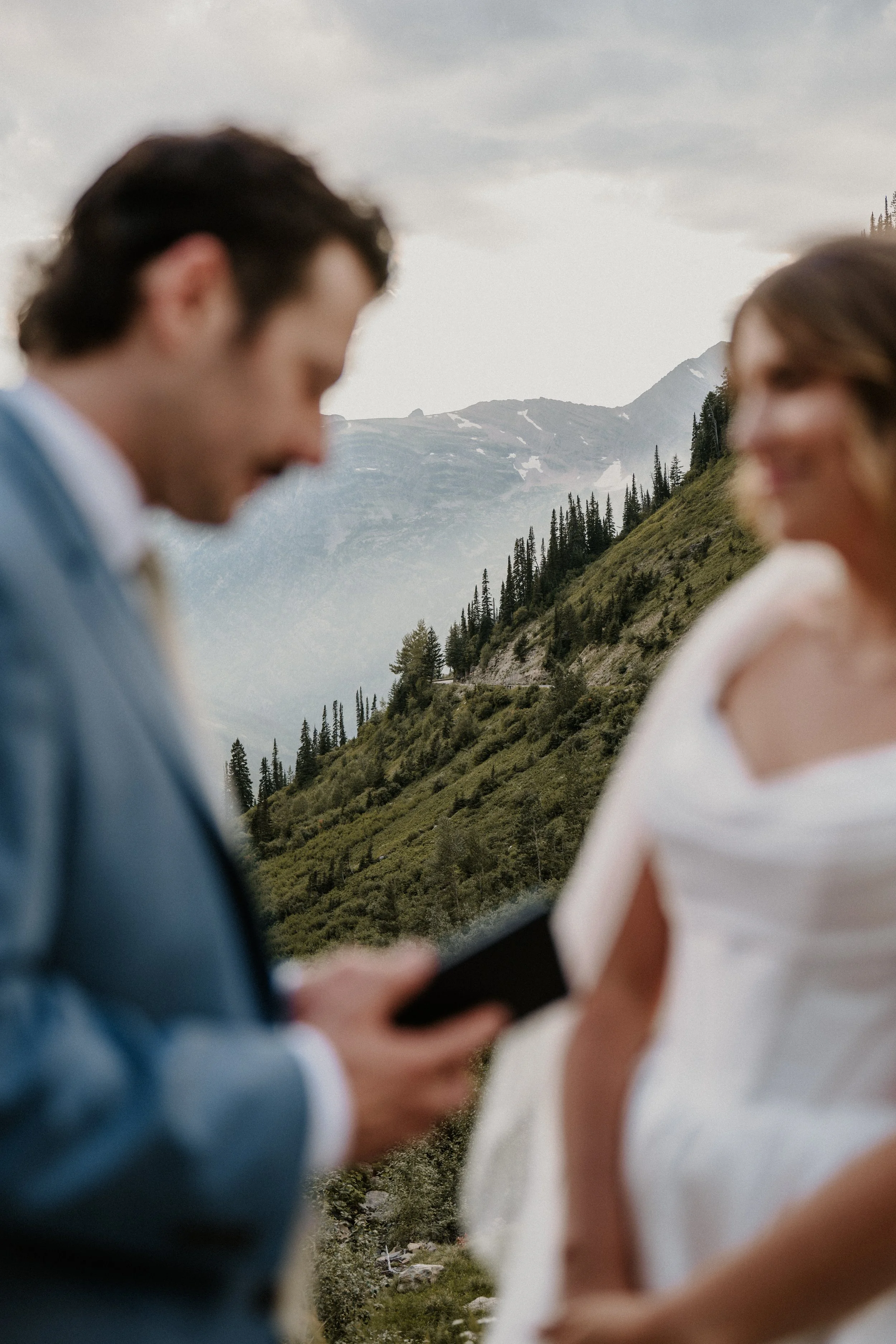
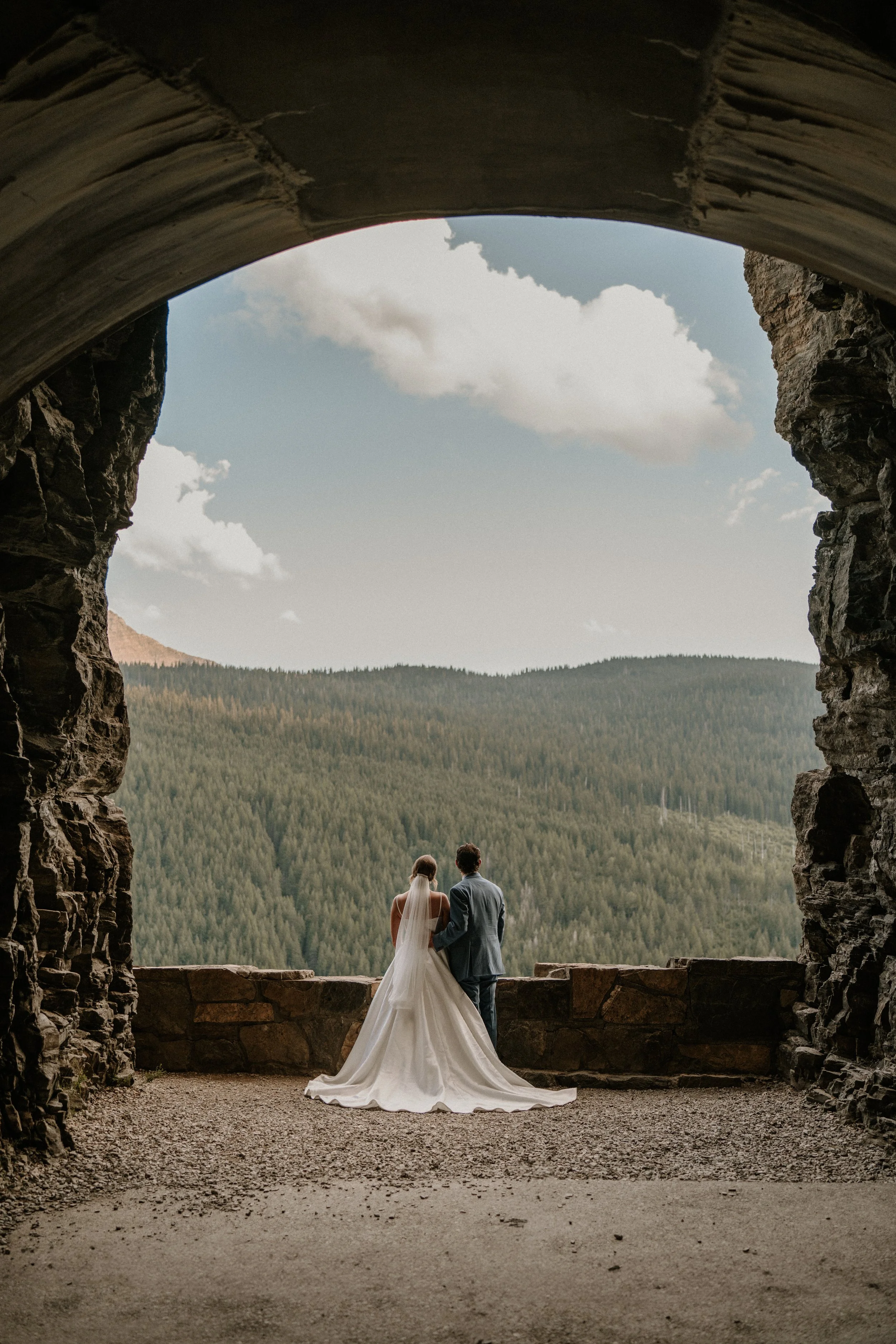
Choose your ceremony location
Glacier has a fixed list of around 32 approved ceremony sites, spread across five regions of the park. Each has its own guest cap, its own access window, and its own personality. Here is how the regions break down.
Lake McDonald and the west side
The easiest access in the park and gorgeous year-round. Think Apgar shoreline, Lake McDonald Lodge Beach, the quiet pullouts along the lake, and Big Bend up on Going-to-the-Sun Road. Caps range from 10 to the big amphitheaters.
North Fork
Remote and wild. Bowman and Kintla Lakes are stunning and lightly visited, but the roads are rough and slow. For couples who want solitude and do not mind earning it.
Two Medicine and Walton
The quietest district, big mountain light, fewer people. Note that several Two Medicine sites are closed for construction in 2026, so confirm before you plan around them.
St. Mary and Cutbank
The dramatic east side, the "American Alps" feel. Sun Point and the St. Mary Lake shoreline are classics for sunrise. The St. Mary Amphitheater has limited 2026 availability due to construction.
Many Glacier
The storybook choice: towering peaks, glacial lakes, the classic Glacier postcard. Lake Josephine is a short hike in. Many Glacier is also one of the more accessible valleys for an intimate ceremony with a few guests.
No petals, glitter, confetti, rice, or bubbles at any site, real or fake. Nothing gets scattered or released, ever. Tables and decor are not allowed either. The land has to be left exactly as you found it.
Picking the right site for your guest count, your light, and your fitness level is where local knowledge pays off. You can see how different locations actually photograph across the Glacier elopement gallery, and I scout sites in person before every booking.
Which Glacier ceremony spot fits you?
First: how do you feel about a crowd?
And how far will you walk in nice shoes?
Pick the right season
Glacier is a completely different park depending on when you come. The season you choose drives which locations are even reachable.
- Late June to mid-September is peak. Going-to-the-Sun Road is fully open, alpine wildflowers are out, and most trails are accessible. It is also the busiest, so early-morning ceremonies are your friend.
- Late September into early October brings golden larches and dramatically thinner crowds. One of my favorite windows.
- May and early June is green and dramatic, water running high, but the high road may still be closed by snow, which limits alpine sites.
- Winter, December to March, is quiet, snowy, and unbelievably beautiful for the right couple. Access is limited and many roads close, so locations are fewer.
Going-to-the-Sun Road typically does not fully open until late June or early July, depending on snowpack. If your heart is set on an alpine spot like Logan Pass or Big Bend, build your date around that opening.
Time it for the light
In the mountains, timing is everything. The same location looks ordinary at noon and unforgettable at sunrise. Two reasons to go early or late:
- Light. Soft, golden, directional light at the edges of the day flatters every photo and every face. Harsh midday sun does the opposite.
- Crowds. The popular sites are genuinely busy in summer. A sunrise ceremony often means you have the place nearly to yourselves.
Sunrise ceremonies are my favorite for exactly this reason: best light, fewest people, and a quiet that suits the moment. The tradeoff is an early alarm. Sunset works beautifully too and is easier on the sleep schedule, though popular spots stay busier into the evening.
Put your exact ceremony time on the permit, and pick it with the light in mind, not just convenience. This is the first thing we nail down together after you book.
Get there and get around
Most couples fly into Glacier Park International Airport near Kalispell, which puts you about 30 minutes from the west entrance. Missoula is another option, roughly two and a half hours out. Rent a car either way: you will want the freedom to chase light and move between spots.
Glacier is enormous and splits roughly into east and west, connected in summer by Going-to-the-Sun Road. Crossing the whole park in a single day is a lot. My honest advice is to choose one side and stay there, or build in a two-day elopement so you are not spending your wedding day driving.
- You still need a park entrance pass even with your ceremony permit.
- Check current road status and any ticketed-entry or shuttle rules for your dates, since the park adjusts these year to year.
- Stay close to your ceremony side: West Glacier and Apgar for the west, St. Mary or Many Glacier for the east.
Glacier elopement: myth or fact?
Build your vendor team
An elopement needs far fewer people than a wedding, but the few you choose matter a lot. The Flathead Valley has a deep bench of florists, hair and makeup artists, officiants, bakers, and planners who know how to work with park rules and mountain logistics.
Your photographer is usually the first hire and often the most useful one, because a local shooter doubles as a planning partner: location scouting, timeline, permit guidance, weather calls, and knowing which spot will actually have the light you want. That is the role I love most. You can see the documentary, moody style I shoot in across my Glacier and Montana elopement work, and decide if it fits the day you are picturing.
- Florals, hair and makeup: plan roughly $400 and up for each.
- Officiant: about $300 to $500 locally, or self-solemnize for free.
- Photographer: the one vendor whose work you keep forever, so weight it accordingly.
Pack and prepare
Mountain weather does what it wants. Plan for it and the day stays magical instead of miserable.
- Layers. Mornings can be in the 40s even in summer, then warm fast. Bring a jacket you are happy to be photographed in.
- Real footwear. Hardy shoes with traction for the walk in. Tuck your ceremony shoes in a pack and change at the spot.
- Bear spray. Rent a canister in town. Make noise on trail, never approach wildlife, and store food properly.
- Water, snacks, sun protection, and a small kit for the permit copy, rings, and vow books.
- A weather backup. Have a second location or time in mind in case of closures or storms.
Wildlife closures happen with no notice, especially on the east side. Your permit does not override a closure, so keep a plan B and watch the alerts in the days before.
Keep it wild and legal
These places stay beautiful because everyone follows the same short list of rules. Honor them and you protect the park and your permit at the same time.
- Nothing scattered or released: no petals, confetti, glitter, rice, birdseed, balloons, or bubbles, real or fake.
- No tables, chairs beyond what a site explicitly allows, or decor setups. Most sites permit snacks but nothing built.
- Stay on durable surfaces. At shorelines, that usually means below the high-water line on rock or gravel, off the vegetation.
- Two-hour limit per location, and your permit is valid only for the exact site, date, and time on it.
- Leave the spot the same or better than you found it. Pack out everything.
None of this is hard. It just takes knowing the rules before you go, which is exactly what a good local team handles for you so the day feels effortless.
The logistics take a few hours to sort. The day they make possible is one you will replay for the rest of your life.
Common questions
Yes. Every wedding or elopement ceremony in Glacier requires a Special Use Permit from the National Park Service, regardless of group size, even for two people with no officiant. The fee is $125 and you apply at least 20 business days ahead.
Most couples book photography 6 to 12 months out, especially for peak summer dates. The permit itself needs 20 business days minimum, but locations and times go first-come, first-served, so earlier is always safer.
Often, yes. Many sites hold 15 to 30 people and the amphitheaters hold far more, while a few intimate spots cap at 10. Your guest count helps decide which location fits, so it goes right on the permit. The park's official ceremony location list shows each site's guest cap.
Not in Montana. The state allows self-solemnization, so you can legally marry yourselves with no officiant and no required witnesses. If you would like one, plan on about $300 to $500 locally.
Usually late June or early July, depending on how much snow the plows have to clear. If you want an alpine location like Logan Pass or Big Bend, build your date around the opening and have a backup in case it runs late.
The big line items are the $125 permit, an officiant if you want one ($300 to $500), florals and hair and makeup ($400+ each), the park entrance pass, and a few nights of lodging. You can see how I structure coverage on my elopements and weddings page.
Let's plan your Glacier elopement
From the permit and the perfect location to the timeline and the light, I help couples build the whole day, then document it honestly. Documentary style, LGBTQ+ inclusive, booking 2026 and 2027.