
Glacier National Park Water: A Local Photographer's Guide
What Most People Don't Know About Glacier's Water
A friendly heads-up about the park's most underrated feature, and a few small habits that let you enjoy it at its absolute best.
Ask most first-time visitors what they're worried about in Glacier and they'll say bears. Ask anyone who actually lives in the Flathead Valley, and they'll mention something else entirely. It isn't the wildlife or the cliffs that we flag for friends visiting for the first time. It's the water.
Not because Glacier's water is scary, but because it behaves nothing like the water you're used to back home. It's colder, faster, and the rocks around it are sneakier than they look. Once you understand a few simple things about it, you can fully relax into the park and photograph it the way it deserves to be photographed. Consider this your friendly local-photographer briefing.
Quick facts about Glacier's water
What locals quietly flag
People arrive in Glacier braced for the wildlife. Bear-spray sales spike at every gas station from Columbia Falls to Browning, and most first-time hikers I meet are noticeably alert on the trail. Which is great. Bear awareness is genuinely important — the National Park Service has solid bear safety information worth reading before you arrive.
But ask any guide, photographer, or longtime ranger what they actually spend the most energy thinking about, and the answer is almost always the water. Not because it's dangerous in some dramatic, hidden way, but because it's just genuinely different from the water most visitors have experience with. Glacier's creeks and waterfalls behave on their own physics. A few quick conceptual shifts and you stop being surprised by them.
The rest of this post walks through what those shifts are, where to go for the best views, and the handful of habits that make every Glacier trip smoother and more photographable.
Three things that make Glacier's water unique
If you take nothing else from this post, take these three. Glacier's water is unlike the water you grew up swimming in for three specific, interesting reasons.
- It Stays Cold All Summer Glacier's creeks are fed by snowmelt and the park's remaining glaciers. Even in late August, most creeks hover in the upper 30s to low 40s. It's a category of cold that surprises everyone.
- It Moves Faster Than It Looks The park drops thousands of feet over short distances. What looks like a calm turquoise pool is often the slack water just above a chute. The famous blue color is partly because the water is constantly moving.
- The Rocks Are Sneaky Rock near a waterfall picks up an invisible film of mist and algae. A surface that looks bone-dry from a few feet away can be slick underfoot. Locals just assume everything near water is slippery.
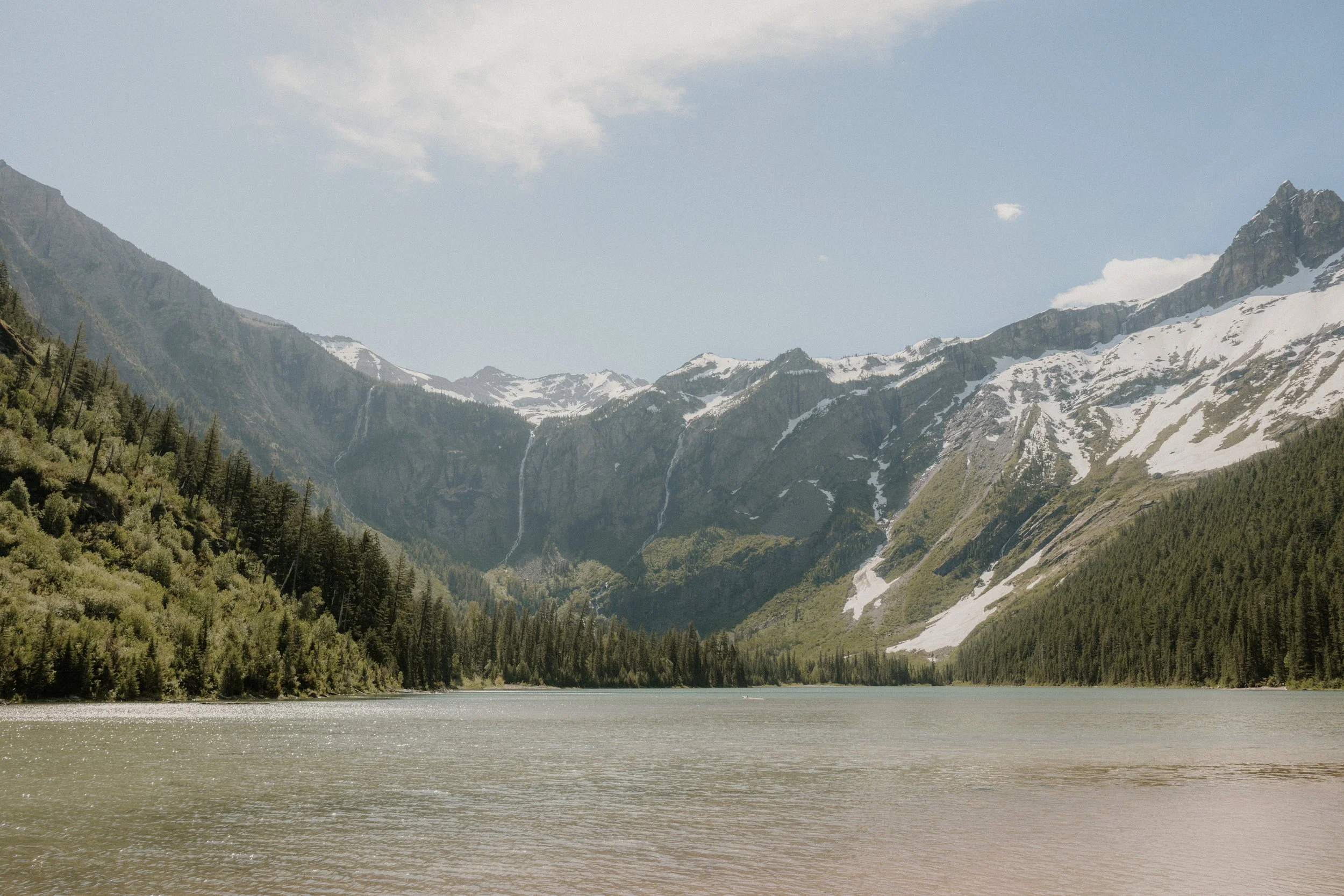
- The Color Is Real That otherworldly turquoise in photos isn't a filter. It's "rock flour," fine sediment ground up by glaciers and suspended in the water, scattering light in the blue-green range. It's most vivid in mid-summer.
None of this is a reason to avoid Glacier's water. The creeks and waterfalls and lakes are half the reason you're coming. It's just a reason to enjoy them from the right spots and with the right footwear, which is what the next section is all about.
Where to take in the best views
Here's the good news that doesn't get said enough: the best views of Glacier's water are almost always from the established trails, boardwalks, and bridges. The Park Service has done a beautiful job of putting people exactly where the framing is incredible and the footing is solid. As your local photographer, here's where I send couples and visitors depending on what they actually want to capture.
Five smart habits that make a big difference
You don't need to think about water constantly. You just need a handful of habits in your back pocket. These are the ones I'd share with a friend visiting for the first time.
- Wear shoes with real grip Trail runners or hiking shoes save the day. Save the cute boots for dinner in Whitefish.
- Treat every rock near water as slippery Even if it looks dry. This single assumption prevents almost every water mishap in the park.
- Stay on the trails and behind the railings The park's viewpoints are placed where they are because that's where the best (and safest) frames live.
- Plan around early-summer snowmelt If you're visiting between mid-May and late June, creeks are at peak flow. Photograph them from bridges and overlooks rather than from streamside.
- Carry an offline map Cell service is rare in the park. Download Gaia GPS or AllTrails offline before you arrive.
If you're planning a Glacier elopement with me, water-feature timing is part of our pre-wedding conversation. Avalanche Gorge in July looks completely different from Avalanche Gorge in late September, and the difference shows up in your photos. We'll plan around it.
The best months for water photography
Glacier's water has a different personality every month. Knowing the calendar helps you arrive with the right expectations and, frankly, the right photos in mind.
- Late May to Late June Peak snowmelt. Waterfalls are at their most dramatic and creek levels are highest. Photographs feel powerful and alive, but the water is at its coldest and fastest. Going-to-the-Sun Road may still be opening in stages.
- July Sweet spot. The peak runoff has settled, the turquoise gorge color is at its most vivid (rock flour is most concentrated mid-summer), and Going-to-the-Sun is fully open. Crowds peak too, so plan early starts.
- August Quieter water, warmer light. Lake McDonald's surface temperature is at its most swimmable, and creek flows are noticeably gentler. Wildfire smoke can occasionally affect light, but the color of the water is forgiving.
- Early to Mid-September My personal favorite for elopements. Smaller crowds, golden cottonwoods reflecting on Lake McDonald, lower creek levels, and the kind of soft autumn light that makes everything look like a painting.
If you're flexible on dates and want both the dramatic waterfall frames and the quieter portrait conditions, the second week of September is hard to beat.

A note from your photographer
I've photographed in this park in every season. Freezing winter mornings on the west side, golden September afternoons at Logan Pass, midsummer days at the falls. Out of every place I work, Glacier is the one I never get tired of. The water is a huge part of why. It changes the entire mood of an image, from the cinematic blue of a midsummer gorge to the still mirror of an autumn lake at sunrise.
If you're planning a Glacier elopement, adventure session, or even just a portrait day, this is the kind of thing we cover before your date so you arrive confident and comfortable. There's always a beautiful frame waiting on the safer side of the railing. My job is to find it for you. If you're starting to map out your own trip, the National Park Service's official Glacier planning page is a solid first stop for permits, road status, and seasonal closures — and feel free to reach out if you'd like a local photographer's perspective on a particular day.
Quick answers for first-time visitors
How cold is the water in Glacier National Park?
Glacier's creeks are fed by snowmelt and remnant glaciers, so they stay in the upper 30s to low 40s Fahrenheit through most of the summer. Even on a 90-degree August afternoon, water in Avalanche Creek and McDonald Creek is roughly the temperature of an ice bath. Lake McDonald's surface warms a bit more, typically into the 50s by late summer.
Can you swim in Lake McDonald?
Yes, swimming is allowed in Lake McDonald and most of Glacier's lakes. The shoreline at Apgar is the most popular spot for a quick dip. Be aware that even in August the water is cold enough to cause cold-water shock, so wade in slowly, stay close to shore, and wear a life jacket if you're going out far.
What's the best way to photograph Avalanche Gorge?
The footbridge at the start of the Avalanche Lake trail gives you the iconic turquoise gorge view from a stable, established viewpoint. Late morning light tends to be best, when the sun has cleared the canyon walls and lit the water. There's no need to leave the trail or climb the rocks above the gorge for a strong photo.
When is Glacier's water at its highest flow?
Peak runoff is typically mid-May through late June, when snowmelt is at its highest. Waterfalls are at their most dramatic, creek levels are highest, and currents are at their fastest. By August and September, flow has dropped significantly and the water settles into its quieter late-summer character.
Do I need special footwear to visit Glacier's waterfalls?
Trail runners or hiking shoes with good rubber grip are ideal. Flip-flops, smooth-soled sneakers, or fashion boots are a bad fit for the wet rocks and boardwalks near most of Glacier's water features. You don't need full mountaineering boots — just real shoes with traction.
Is Glacier's water safe to drink straight from the creek?
No. Even pristine-looking glacial water can carry bacteria like giardia. Bring a water filter or purification tablets if you plan to refill on long hikes, or carry enough water from the trailhead for your full day.
Can I take photos of the famous colored rocks in Lake McDonald?
Yes. The colored rocks (red, green, and rust-streaked) are easiest to see and photograph in the shallows along the east and south shores of Lake McDonald, especially near Apgar. You can stay completely dry on the rocky shoreline while shooting them. Calm, overcast mornings tend to give the cleanest reflections.
Eloping or adventuring in Glacier this year?
I've spent years building wedding days and portrait sessions around this park's best light and most photogenic corners. Reach out if you want a real conversation about it.
Let's TalkWish you were here. Honestly? You could be.
Good dates in the park go fast. Here is everything about getting married in Glacier National Park →