

The Ultimate
Wedding Guide
A working planning document for couples getting married anywhere. Barn, ballroom, backyard, beach, or the courthouse steps. Timelines, budgets, checklists, and the days around it all. Built from real weddings, not Pinterest.
Start Reading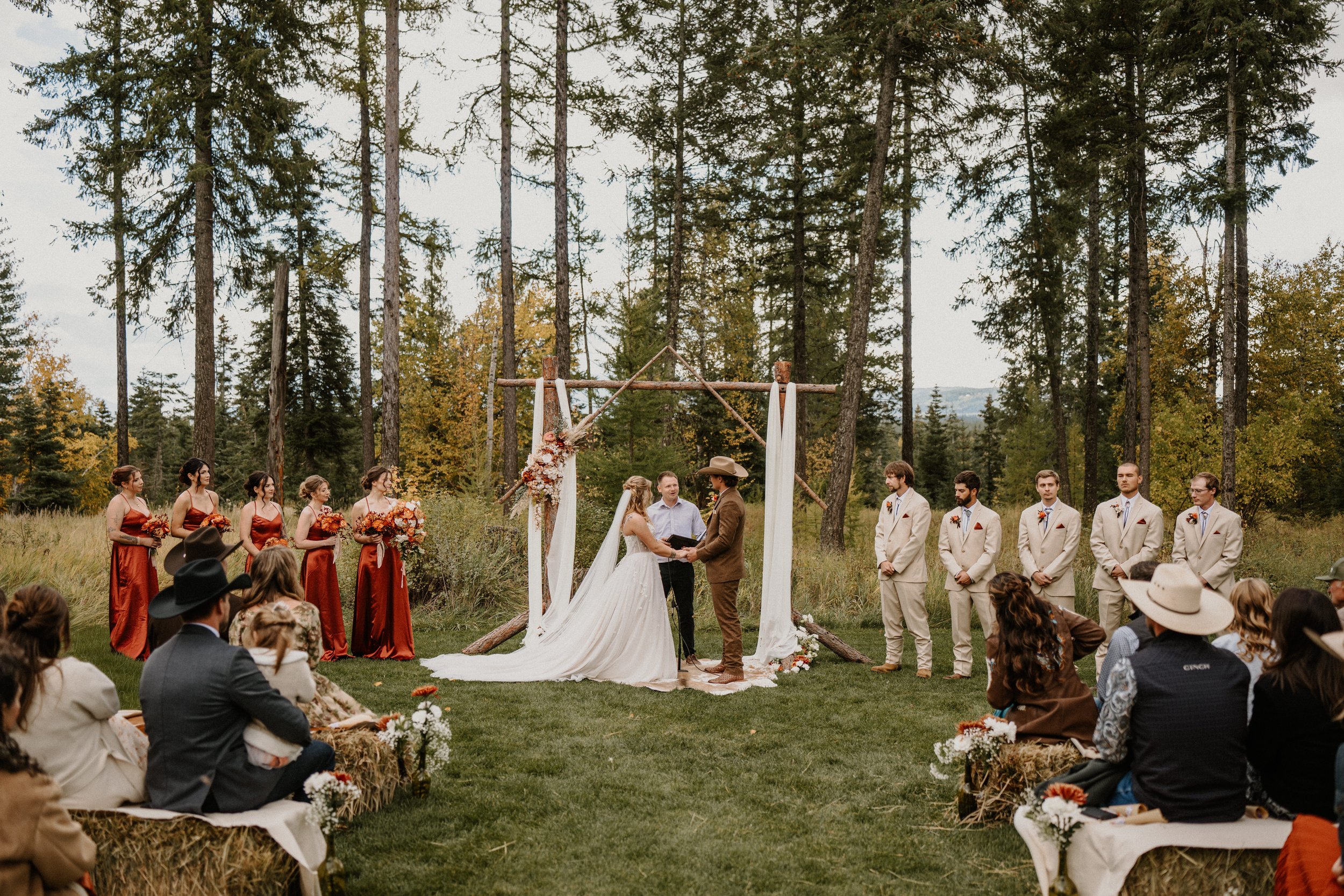
This isn't a dream board. It's a working document. A blueprint for couples actually planning a wedding, written by a photographer who has spent a decade inside them, from the first venue tour to the last song of the night. Use the parts you need, skip the parts you don't. The whole thing is yours.
I wrote it because most wedding guides sound like brochures. This one walks through real budgets, gives you the actual ceremony time you should pick, tells you who pays for what and how much to tip, and hands you the scripts for the conversations nobody warns you about. It's blunt where bluntness helps. It's affectionate where weddings earn it.
Read it cover to cover or jump straight to the chapters that matter. Either way, you'll leave with a clearer head.
What's In This Document
Your Wedding Starts Here
I put this guide together for couples planning a wedding, full stop. Big city, small town, home state or destination. After years of photographing weddings, I collected a lot of knowledge that doesn't live anywhere on the internet in one place. So I put it here.
You'll find budgets, marriage license logistics, day-of timelines, guest experience tips, etiquette answers, and a couple dozen interactive tools that do the math for you. It's the resource I wish every couple had when they first start.
Here's the thing nobody tells you: weddings run on the same machinery everywhere. The venue changes, the guest count changes, the budget changes. The decisions don't. Whether you're hosting 200 people at a ranch or 30 in a restaurant's back room, the same forty choices stand between you and a great day. This guide walks you through all of them.

Meet your photographer
I'm Stan, a documentary-style wedding and elopement photographer based in Northwest Montana and shooting wherever a good story takes me. Originally from Bulgaria, I moved to the US in 2016, met my husband in Billings, and we settled in Kalispell, his hometown.
I focus on the real, unscripted moments, the ones that make your day yours. I'll guide when it helps and step back when the moment is already doing its thing. Outside of weddings I'm at the gym, baking bread that's mostly successful, or making my cat tolerate me.
I'd love to be part of your day. Let's talk.


Wedding Basics
Four answers, thirty seconds. Every tool in this guide opens already tuned to your wedding: the bar math starts at your guest count, the sun math knows your city, the email writer knows your names. Each tool stays fully editable; this just sets the starting line. Skip it and nothing breaks.
Saves in this browser as you type. Tools you've already customized keep your numbers; everything untouched opens tuned to these next time the page loads.
Wedding Planning Timeline
Wedding venues, especially the popular ones, book 12 to 18 months out during peak season. Here's a realistic planning timeline, wherever you're marrying.
Foundations
- Set your date (or a few options)
- Determine your budget
- Finalize your guest list
- Book your venue. This is the big one.
- Hire a photographer and videographer
- Hire a planner or coordinator if desired
- Start thinking about your overall vision
Building the team
- Book florist, caterer, DJ or band
- Book hair and makeup
- Order wedding attire
- Book an officiant
- Send save-the-dates
- Reserve hotel room blocks
- Book rentals (tables, chairs, linens)
Details
- Order and send invitations (6 to 8 weeks before)
- Plan rehearsal dinner and welcome events
- Book transportation or shuttles
- Purchase wedding party gifts
- Arrange guest activities or welcome bags
- Schedule tastings with your caterer
Fine-tuning
- Write your vows
- Finalize timeline with photographer and coordinator
- Confirm vendor details and pay invoices
- Apply for your marriage license
- Finalize seating chart and place cards
- Do a hair and makeup trial
Final details
- Confirm RSVPs and final headcount
- Pick up your marriage license
- Break in your shoes
- Build a day-of emergency kit
- Send final timeline to all vendors
Breathe
- Delegate tasks to your party or coordinator
- Rest, hydrate, eat well
- Enjoy the rehearsal dinner
- Trust the plan. You've done the work.
Picking Your Date
Before the venue, before the dress, before any of it: the date. It quietly sets your price, your weather odds, and your light. Most couples pick one date and defend it to the death. The savvier move is picking two or three candidates and letting the numbers talk.
Same room, different bill
A Saturday in peak season costs full price, because everyone wants it. The exact same venue is often 10 to 30 percent cheaper on a Friday or Sunday, and cheaper again in the off-season. Photographers, caterers, and DJs usually discount those dates too, since their calendars have the same empty spots. So if the budget is tight, changing the date is the easiest way to save thousands without giving up anything you actually care about.
Know your region's odds
Every region has a safest window and a gamble: afternoon storms in the mountains, hurricane season on the coasts, brutal heat in the desert, mud season up north. You can't buy good weather, but you can buy better odds. Pick the window first, the pretty date second.
Tempting, with a catch
Guests get the Monday off, which is real generosity toward the ones flying in. But flights and hotels spike, some vendors add surcharges, and a few guests guard those weekends fiercely. Great for far-flung families, risky for budgets. Decide which problem you'd rather have.
Run it through the suggester
A November Saturday can mean a 4:45 sunset and a 2:15 ceremony; late June can hand you light past 8:30. Before you fall for a date, run it through the ceremony time tool below and make sure you like the day it builds.
Choosing Your Venue
The venue is sixty percent of every other decision. It picks your caterer rules, your rental list, your rain plan, your closing time, and half your photos. Choose it like the multiplier it is, not just a pretty room.
What you're actually buying. Space, hours, and rules. The listed price is a starting number, so ask what lives inside it: tables, chairs, setup and teardown time, parking, staff. Two venues at the same sticker price can land thousands apart once the rental list arrives.
In-house versus bring-your-own catering. In-house means convenience and a food-and-beverage minimum; ask for that minimum before the room fee, because it is the real price. Bring-your-own means a lower building fee plus a caterer plus rentals: more control, more logistics. Neither is cheaper by default. Run both as complete totals before deciding.
A venue coordinator is not your planner. The coordinator works for the building: lights on, tables out, doors locked by eleven. Your timeline, your vendor wrangling, your small crisis at four o'clock belong to a planner or day-of coordinator who works for you. Budget accordingly and don't let the titles blur.
What exactly is included, in writing?
Tables, chairs, linens, staff, setup time, cleanup. Get the list on paper, then price whatever's missing before you compare venues.
What are our hours?
When can vendors get in, when must music stop, when do lights come on, and what does overtime cost. An 11 p.m. cutoff and a 10 p.m. cutoff are different weddings.
Show me the rain plan.
Stand in the actual backup space and picture it holding your full guest count, chairs and all. If the answer is a hallway, that's your answer.
What are the rules?
Outside vendors, open flame, decor restrictions, sparklers, dogs, noise ordinances, confetti. Every rule you discover now is a surprise you skip later.
What does our date cost, and the Friday next to it?
Ask with your candidate dates in hand. The gap between those two numbers tells you how much room there is to talk.
Venue Tour Scorecard
By the third tour, every venue blurs into the last one. Score each place on the same five things while you're still in the parking lot: 1 is a no, 5 is a yes. It saves as you go and keeps them ranked.
The Rain Plan
Nobody plans to use the rain plan. Build it anyway, because the couples who treat Plan B as real are the ones who look calm in the photos when the sky opens.
One person decides
Agree in advance on who makes the weather call and when: usually your planner or coordinator, by mid-morning for an evening ceremony, using a rule you set together, like "over sixty percent chance during the ceremony hour and we flip." A decision made at ten is a plan. A decision made at four thirty is a scramble.
Price the option early
A tent for a hundred guests starts in the low four figures, and sides, flooring, heat, and lighting stack up fast. Most rental companies will hold a tent on option with a decision deadline, so book the option early and note the cancel-by date. Ask your venue which tent company already knows their lawn; that answer saves everyone a site visit.
Same room, twice
Holding the ceremony in the reception space works beautifully if the venue has done it before. It needs 45 to 90 minutes, staff to move everything, and somewhere to hide your guests, which is what cocktail hour is for. Walk through the flip on your tour: who moves what, and where do people stand while it happens.
The quiet menace
Wind wrecks more ceremonies than rain: arches, florals, candles, veils, place cards. Weight everything, skip loose fabric on exposed sites, and give your veil a handler. Buy six or eight clear umbrellas early; they're cheap, and in photographs they read as intentional instead of emergency.
Build Your Wedding
The honest answer to "what does this cost" is: it depends on what you choose. Below is every line item I see in real weddings, with the actual range each one tends to fall in. Every number is editable, so tune the ranges to your market as quotes come in. Start from zero. Tap to add what matters. Skip what doesn't.
What you'll need
Tap to add, then slide each one to your number.
Hosting your guests
Tap to add, slide to your number. Rentals and stationery scale per guest.
Build your day
Tap what matters, slide to your number. Skip what doesn't.
Real-world numbers from real weddings. Yours may land anywhere in this range based on vendor choice, season, and how you celebrate.
Allocate by percentage
Already have a number in mind? Plug it in, then make it yours: drag any slider and the rest rebalances to 100%, lock the categories you've already decided, rename anything, add your own.
Standard industry breakdowns from real weddings. Trade-offs are normal: many couples bump photography or florals up by trimming elsewhere.
Worth the Splurge
Photography and videography. The only things that last after the flowers wilt and the cake is eaten.
A great caterer. Guests will talk about the food for years. Invest here.
Lighting and ambiance. String lights, candles, and smart lighting design can transform any space.
Where to Save
DIY stationery. Canva and Minted make beautiful, affordable options.
Cake. A small cutting cake plus a dessert table is often more fun and less expensive than a tiered wedding cake.
Favors. Most guests leave them behind. If you do favors, make them edible.


Marriage License
Every state runs marriage licenses through a local clerk's office, and the process rhymes everywhere: apply, pay, wait if your state requires it, marry before the license expires, file. The details are set state by state, so treat this page as the map and your county clerk's website as the territory.
Apply, Usually Together
Most states want both partners in person at the county clerk, clerk of court, recorder, or town clerk; the office name varies, the counter doesn't. Bring valid photo ID. Many states also ask for your Social Security number, and some want parents' full names and birthplaces. A growing number let you start the application online, then finish in person.
Pay the Fee
Plan on $25 to $115 depending on the state and county, and a few states discount it if you complete a premarital course. Payment methods vary by office, so confirm accepted forms (cash, check, or card) before you go. Same-sex couples have the same rights and process everywhere in the country.
Mind the Two Clocks
Clock one: the waiting period. Most states have none, but some make you wait one to six days between applying and marrying. Clock two: expiration. Licenses are commonly good for 30 to 90 days; a few states give you six months or more. Apply inside that window, not the week you get engaged.
After the Ceremony
Your officiant signs and returns the license (some states also want one or two witness signatures). The clerk records it and mails certified copies, typically in 2 to 4 weeks, for around $5 to $25 each. Order 2 to 3 extras for name changes, banks, and passports.
Your Vendor Team
I can't hand you a directory for every town in the country. I can hand you the method that beats one. Five moves, in order, and they work in a big city or a county with one stoplight.
Book in Demand Order
Venue first. Then the one-per-date people: photographer, videographer, planner. Then catering and music. Then florals, attire, hair and makeup. Then everything else. The order isn't about importance; it's about who can only say yes to one couple per Saturday.
Vet With Full Galleries
A feed is a highlight reel. Ask every photographer and videographer for one complete wedding, start to finish, and look at the hard parts: the dark reception, the family formals, the rainy day. Anyone can shine at golden hour. You're hiring them for the other ten hours.
Read Reviews for Patterns
Recent, named, and specific beats old, anonymous, and glowing. One critical review answered with grace tells you more than fifty vague five-stars. You're looking for the same sentence appearing twice: "she kept us calm," "they went over our timeline three times," "he disappeared after the deposit."
Get on a Call
Twenty minutes of voice tells you more than twenty emails. You'll spend eight-plus hours of your wedding day with some of these people. Hire the ones you'd want at your dinner table, because that's functionally where they'll be.
Read the Money Terms
Deposits of 25 to 50 percent are standard and usually nonrefundable; that's what holds your date. Before signing, find the postponement clause, the cancellation clause, the delivery timeline, and whether they carry liability insurance, since many venues require a certificate. Boring reading, cheap insurance.
Wedding Insurance
Nobody dreams about insurance. Buy it anyway. It's one of the cheapest line items on the whole budget and the only one that can hand your money back.
It's two different products. Liability covers the "someone got hurt or the venue got damaged" scenario, and it's what venues demand. Cancellation coverage protects your deposits if the day itself collapses. Plenty of couples buy liability because the venue made them, then assume they're covered if a vendor vanishes. They're not. Know which one you're holding.
The certificate venues demand. Most venues require proof of liability, commonly a million dollars, with the venue named as additional insured. A one-day event policy typically runs $100 to $300 and takes minutes to buy online. If you're supplying your own alcohol, ask specifically about host liquor liability; many venues require that line item by name.
What cancellation actually covers, and doesn't. Covered, typically: vendor bankruptcy or no-show, venue closure, extreme weather that prevents the event, serious illness or injury, military deployment. Almost never covered: changing your mind. Policies usually run $150 to $600 depending on how much you're protecting, and the exclusions page is the part worth reading twice.
When to buy. Liability: whenever the venue asks, since it's cheap and instant. Cancellation: the week you start writing real deposit checks, because a policy can't protect money you lost before it started.
Reaching Out to Vendors
Most couples write four-sentence inquiries and wonder why they hear back slowly. Vendors are people. They prioritize the inquiries that show effort. Here's what to include.
Your names and the date
Even if your date is flexible, give a range. "Late August or early September 2027" is better than "summer-ish."
The venue (or top picks)
Vendors immediately know if they can serve that location. Drive times, equipment access, and travel fees all hinge on it.
Approximate guest count
Big difference between 30 and 200. Helps vendors gauge fit and quote accurately.
What you're looking for
A two-sentence vibe statement. "Documentary style, low-pressure, family-focused." Saves both of you time on misalignment.
How they should respond
"Available?" plus "rough investment for our setup?" Two clear asks. Vendors answer faster when the path is obvious.
Inquiry Email Generator
Every email a couple ends up sending a vendor, from the first hello to the thank-you after, including the awkward ones nobody knows how to write: the nudge, the budget talk, the pass. Pick one, fill the fields, and I'll write the version I'd want to receive. Copy, tweak the voice to sound like you, send.
Day-Of Contact Sheet
Every person someone might need to reach on the wedding day, in one place. Edit any field, add or remove rows, then print it and hand a copy to your coordinator, your point person, and whoever is wrangling the morning. When something runs late, this is the page that saves it.
Contracts & Payments
Every vendor comes with a total, a deposit, and two or three due dates that are nowhere near each other. Log them here the day you sign, and the money stops ambushing you. It saves as you go and always shows you what's next.
The Day-Of Timeline
Step one: pick your ceremony time. Step two: build the rest of the day from it. Pick your nearest city and the math handles latitude, time zone, and daylight saving for you, anywhere in the country.
When should we say I do?
Pick your wedding date. I'll calculate when the light's softest, when you'll have time for portraits, and the exact ceremony time I'd suggest.
Pick your nearest city and a date to see your light timing.
From ceremony time
Working backward and forward from your ceremony. Edit any time or label, add or remove steps, and make it yours. It all saves automatically, and Rebuild starts fresh from the ceremony time.
The Wedding Party
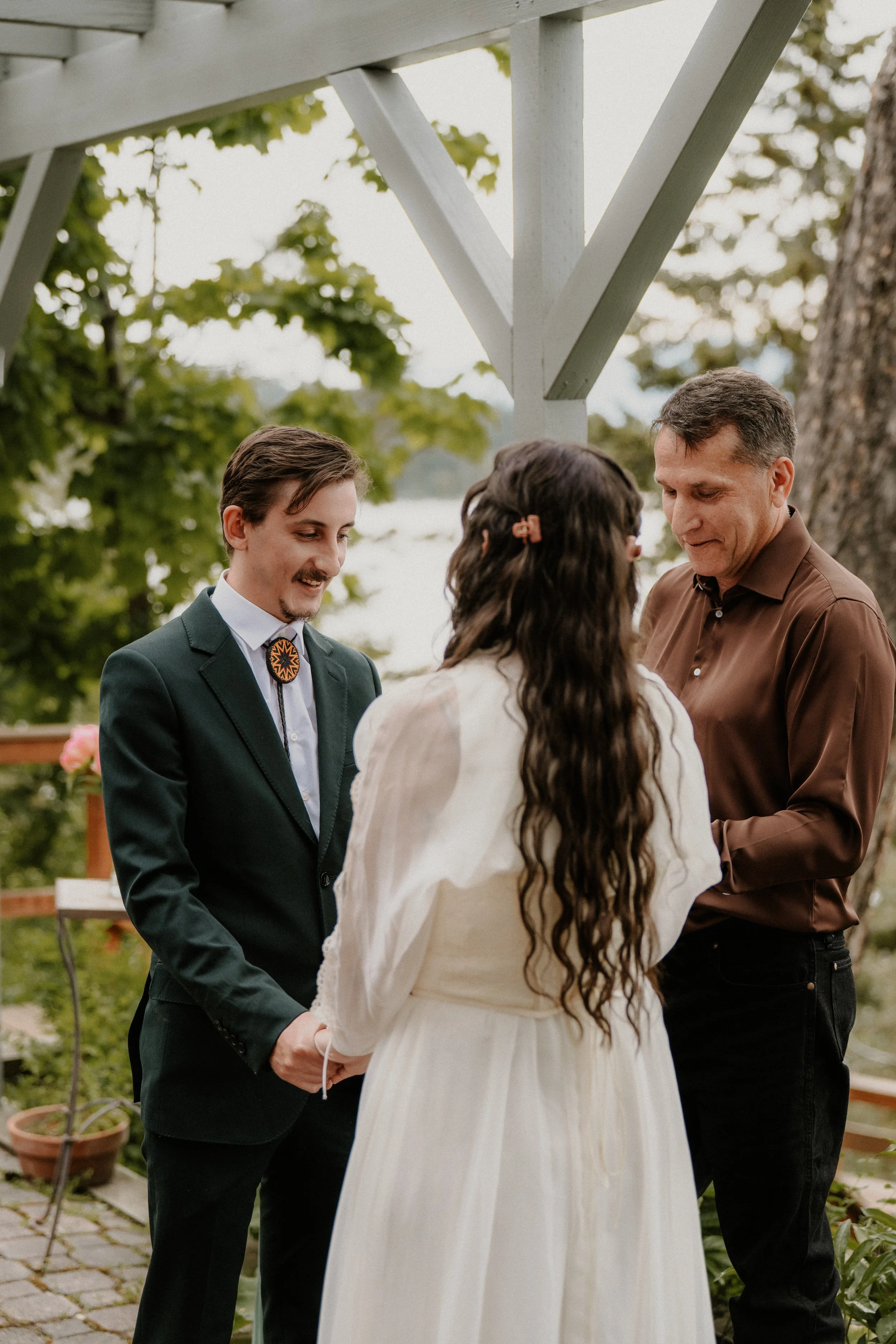
Pick people, not a headcount. The sides don't need to match, the genders don't need to sort, and a party of zero is a real option that some of the calmest weddings I've photographed chose on purpose.
Be honest about the price of yes. Standing up for you costs your people real money: attire, travel, the shower, the bachelor or bachelorette weekend. Say the numbers out loud early, and subsidize where you can. Nobody should discover the cost of loving you from a group chat.
You're asking for jobs, not accessories. Rehearsal presence, on-time readiness, and one real duty each on the day. Hand those duties out below and in the delegation matrix that follows, and your wedding party becomes the crew that actually runs the morning.
Ask like it's an invitation, and build the exit ramp. "I'd love you beside me, and I completely understand if this is an expensive year" is a whole sentence. The people who say yes to that version mean it.
The roster below saves as you go. Give everyone a role and one day-of duty, then copy the whole thing for your planner or coordinator.
The Day-Of
Delegation Matrix
The biggest reason couples hire a month-of coordinator is so nobody calls the couple on the wedding day. If you do not have one, this is how you build that wall yourself: one name and one phone number per job, decided before the day. Fill it in, and nothing lands on you.
The Emergency Kit
Someone's tote bag quietly saves every wedding I've ever photographed. Pack it the week before, hand it to your most competent friend (that's a delegation matrix job), and check things off as they go in the bag.
The Wedding Weekend
Destination weddings have a rhythm. Friday rolls in, Sunday brunches out. Here's a clean three-day shape that works for most couples and that guests actually enjoy.
Arrival & Rehearsal
- Guests arrive throughout the day
- Welcome bags at hotels
- Rehearsal at the venue (45 to 60 min)
- Rehearsal dinner with the wedding party and close family
- Optional casual welcome drinks for all guests after
The Wedding
- Slow morning for the couple, getting-ready starts mid-morning
- First look, portraits, ceremony
- Cocktail hour, reception, dancing
- Send-off (sparklers, lanterns, glow sticks)
Farewell brunch
- Casual brunch for guests still in town
- Often hosted at the same venue or a nearby restaurant
- 10am to noon is the sweet spot
- Couple often leaves early to start the honeymoon
The Rehearsal
Director Script
Hand this script to one organized friend or sibling. They read it top to bottom, everyone is done in thirty minutes, and you never once have to raise your voice at your mother.
Vow & Toast Studio
The blank page is the enemy, so don't start with one. Answer the prompts in your own words, plain and specific, and the studio arranges them into a structured draft. It won't write a single line for you; the words stay yours. That's the point.
The Family
Portraits
The single most useful page you can hand your photographer, and the one that forces the family-dynamics conversation before the day instead of during it. Drag the groupings into the order you want them shot, write in the actual first names, and tap the + under any group to add another. I will total the setups and tell you how long it really takes.
Style, Theme
& Tablescapes
Before you book a single rental or pin a hundred photos, get your vibe on paper. Tap the directions that pull at you and I will suggest a palette for each. Keep the colors you love, add your own, and pin every loose idea to the board, then copy a one-page brief for your planner, florist, and me.
Wherever you're marrying, the setting is already doing most of the work. The best wedding design doesn't fight its surroundings, it complements them. A few principles I've seen succeed over and over.
Let the venue lead. A historic mansion wants different florals than a mountain summit. A barn wants different lighting than a lakeside lodge. Start from the room.
Wood, candlelight, and texture. These three things make a reception room feel grounded. Cloth napkins instead of paper. Real candles where allowed (battery is fine, just don't fake the wax). Wood place settings or runners.
Florals seasonally. July dahlias and September dried wheat both belong here. February imported peonies don't. Local florists will guide you toward what's in bloom.
Attire & Beauty
Wedding clothes are a timeline problem disguised as a shopping problem. The dress you love and the dress that's ready on your date are only the same dress if you start early enough.
The alterations clock is the real deadline. Made-to-order gowns take four to six months to arrive, so order eight to ten months out. Alterations start eight to twelve weeks before the day and usually take two or three fittings. Suits: made-to-measure needs six to eight weeks plus tailoring; off the rack still wants two to four weeks with a tailor. And budget alterations as their own line, $150 to $800 or more for gowns, because they are never, ever included.
Buy for the body and the venue, not the hanger. Do the sit test and the dance test in the fitting room, arms up and everything. Match fabric to climate; velvet in July is a decision you make once. Walk the shoes around the house for a week, and pack the flat pair for hour six, because you will want them and pride is not a podiatrist.
Hair and makeup are morning math. Book the trial four to eight weeks out, ideally the same day as another event so the face gets a real test drive. On the day, budget roughly forty-five minutes to an hour per service per person; artists start with the wedding party and finish with you, so the party size decides when the morning starts. Not enough artists is how a 4 p.m. ceremony gets a 6 a.m. alarm.
Everyone else, gently. Party attire ordered four to five months out. Give your people a palette and a range instead of one identical garment, and they'll look like themselves standing next to you, which is the entire point. Parents coordinate best by photo, not decree.
Palette & Bouquet Matcher
Three questions about your dress or suit, your season, and your setting. I'll hand you a color story and a bouquet built from what actually grows here, the kind of thing a planner charges for. Save the palettes you like, and check the month-by-month bloom guide below it.
The Details
The things people remember are almost never the things you obsess over. The first dance song. The toast that landed. The cocktail napkin with a joke on it. Whatever your grandparent said when they hugged you.
Plan the structure carefully. Then let go. The good stuff happens between the planned moments.
Stationery Counter
Invitations go per household, not per guest. Couples reorder paper twice as often as they should. Plug in your numbers, get the right counts the first time.
Guest Experience
The best weddings I've shot have one thing in common: the couple thought about their guests. Not in a fussy way. Just enough to make people feel taken care of.
Welcome bags at the hotel are an easy win. Local snacks, a bottle of water, a printed itinerary with addresses and Sunday brunch info. $15 to $25 a bag.
Shuttles are nearly mandatory if your venue is rural (most are). Let your guests drink. Liability stays with whoever's driving anyway.
An itinerary website in advance saves your inbox. The Knot, Zola, and Joy all work. Put hotels, airports, addresses, dress code, and the dress code translation in plain English ("Cocktail attire" means men in suits, women in dresses or jumpsuits, you can wear cowboy boots).
Accessibility & Inclusion
A wedding is a room full of people you love at every age and ability. Plan for the whole room, and nobody has to ask, which is the quiet difference between a wedding that welcomes people and one that merely admits them.
Scout it as your least-mobile guest. Walk the venue from the parking spot to the seat to the bathroom to the dance floor, and be honest about grass, gravel, stairs, and distances. Reserve the closest parking and the aisle seats by name, confirm ramps and elevators instead of assuming them, and if the ceremony site is a long walk, arrange a golf cart. Venues have done all of this before; you only have to ask.
Make the ceremony seeable and hearable. Mic your officiant and your readers, always, outdoors or in. Hold front seats for anyone who reads lips or sees less. Large-print programs cost nothing extra, and if anyone in your crowd signs, interpreters book two to three months out, not two weeks.
Food without interrogation. Collect needs ahead through the dietary tracker below, label everything on a buffet, and make the vegan and gluten-free options real plates, not garnish. Nobody should have to conduct an investigation to eat at your wedding.
Sensory and stamina. A quieter corner or room to escape to, chairs available during cocktail hour because a standing-only hour is brutal at eighty, a kids' corner if kids are coming, and a heads-up in the program if sparklers or strobing lights are planned. Small mercies, long remembered.
Inclusion past the ramp. Seat guests who'll need translating next to the bilingual cousins on purpose. Weave in both families' traditions where you want them. Use language on signage and forms that fits the actual people you invited. None of this costs money; all of it gets noticed.
Food, Drink & Wineries
Where to eat when you're not at the venue. Organized by town.
Picking the night-before spot
You want four things: a private room or full buyout that fits your headcount, a location 10 to 15 minutes from where people are sleeping, a menu the picky uncle and the adventurous cousin can both survive, and a noise level that lets toasts actually land.
Steakhouses, farm-to-table rooms, and upscale-casual spots with a back room are the classic picks for a reason.
Casual by design
A brewery taproom, a pizza buyout, a backyard, a hotel patio. Walkable from the hotel block if you can manage it, and run as a come-and-go window (say 7 to 9) instead of a seated start time.
This is the pressure valve that keeps the rehearsal dinner small and the wedding day hellos short.
The soft landing
Find the place in town that already does big-group breakfast well, or cater simply at the house. Ten to noon, come as you are, leave when you like.
This is where the real debrief happens, so don't skip it just because you'll be tired. You will be tired. Go anyway.
Finding them anywhere
Ask your venue coordinator and your photographer first; they eat in that town every working weekend and know which rooms handle groups gracefully. Then search "[your town] private dining room" and read the group-menu PDF before you ever call.
A restaurant that answers email quickly will run your party well. One that takes a week to reply is telling you something.
For tastings
Wineries, breweries, and distilleries near your venue are the easiest built-in guest activity: half a day, minimal planning, every generation can tag along.
Many host private events for rehearsal dinners or welcome parties. Ask about the patio before you ask about the private room.
Numbers that matter
For 30 or more, book 4 to 6 months out, longer in peak season. Expect set group menus at $45 to $95 a head plus bar, and ask about the food-and-beverage minimum, not just the room fee.
Confirm your final count 72 hours out, and always tell them it's a wedding party. Rooms magically improve.
Tasting
& Final Menu
The tasting goes by fast and everything sounds good in the moment. Log each dish as you try it, rate it, and tap the heart on the ones you love. They flow straight onto the menu card beside you, building your final menu as you go, ready to hand your caterer.
Music & Entertainment
Music is the invisible architecture of a reception. Nobody remembers the DJ's name when it goes right. Everybody remembers when it goes wrong.
Band versus DJ is a room question, not a taste question. A good DJ runs $1,000 to $3,000 and brings range, requests, and a small footprint. A good band runs $3,500 to $12,000 and brings a spectacle that fills a big room with energy no playlist matches. Small space, wide-ranging crowd, tighter budget: DJ. Big room, big budget, one genre your family actually dances to: band. Either way, hire the person, not the equipment list.
Only four songs are actually yours to pick. The processional, the first dance, the parent dances, and the last song. Choose those four with care and hand the other five hours to a professional. Micromanaged playlists are how dance floors die; the pro's whole job is reading a room you'll be too busy to watch.
Brief like a pro. What a DJ or bandleader actually needs from you: ten to fifteen must-plays, the do-not-play list, and a sense of eras and genres. The do-not-play list is the important one. It's the only place you can prevent the song that makes your skin crawl, the breakup anthem, the one your ex claimed.
Sound is logistics, not vibes. Ceremony audio is a separate job: officiant mic, reader mic, music cues. Confirm the venue's power situation, the noise ordinance, and the hard cutoff time, and if you're outdoors, ask what happens to the gear when the weather turns.
Build both lists below as songs occur to you over the months, then copy the whole brief for your DJ or bandleader. Saves as you go.
Must-Play
Do-Not-Play
The Rental Math
Cheat Sheet
Without a planner or a full-service caterer, this is the math couples get wrong: someone ends up with no chair, or the head table has no linen, or there are exactly zero spare forks when one hits the grass. Set your numbers and I'll write the actual order sheet, 10% overage baked in, ready to email to the rental company.
Master Checklist
Make it yours. Add or remove anything, check items off as you go, and it all saves automatically, even after you close the tab. (Saved locally in your browser, never anywhere else.)

Who Pays For What
Use the dropdown on each line to assign who is covering it. Add your own line items, remove what does not apply, and bring the totals to the conversation.
The Gratuity & Tipping Calculator
Nobody teaches you this part, so couples either over-tip out of guilt or accidentally stiff the crew who carried the day. Toggle on the vendors you have, plug in the bill or headcount, and I'll do the math, plus tell you how many cash envelopes to prepare.


Guest List & Dietary Tracker
As the dietary notes come back on your RSVPs, add each guest with what they need. The tally builds itself, so you always have a clear picture of what your guests will be eating. When the RSVPs are in, copy, print, or download the finished list and hand it straight to your caterer.
The Seating Planner
The puzzle every couple loses sleep over. Start from a layout, then make it your room: drag the tables where they actually go, drag your guests into seats. Decide the big question first, just the two of you at a sweetheart table, or the whole wedding party up front, then sort Aunt Carol away from the cousin she feuds with. It saves as you go.
Welcome Bag Builder
An easy win for out-of-town guests. Start from these ideas, edit any name or cost, add whatever you like, and uncheck what you skip. Set how many bags you need (one per household), and the cost adds up live.

Cake & Dessert Calculator
Set your headcount and plan, then build your own cake tier by tier and your own dessert table. Pick each tier's size, add or remove tiers, and I will tell you if your cake covers the room or comes up short.
After the Wedding
The wedding ends. The paperwork, gently, does not. Here's the soft landing, in the order that saves you the most backtracking.
File the License
Your officiant signs and returns it; most states give them a filing window of just days, so confirm it happened. Then order two or three certified copies. The Marriage License chapter covers the details.
The Name Change, in Order
If you're changing: Social Security first, then driver's license, then passport, then banks and cards, then payroll, insurance, voter registration, and the long tail of accounts. Social Security leads because nearly everything else checks against it. Keeping your name? Skip this step entirely and go enjoy the leftovers.
Thank-Yous on a System
The real deadline is about three months. Batch ten notes a night, name the actual gift in each one, and log gifts as you open them so nothing slips. A system beats sentiment here; the sentiment goes inside the note.
Pay It Back to Your Vendors
Write reviews within the month, while the details are fresh; reviews are how the people who carried your day eat. When your gallery arrives, send your favorite shots to the florist, the planner, the venue. Small industry, long memory, and it costs you ten minutes.
Preserve the Evidence
Gown or suit to the cleaner within a few weeks, before invisible stains set. Decide about drying or pressing the bouquet in the first days, not after it wilts. And the week your photo gallery lands, download all of it to two separate places. Galleries expire, hard drives die; do both.
Gift & Thank-You Tracker
Log gifts the day you open them, while the card is still taped to the box. Check each one off as its note goes out, and the three-month deadline takes care of itself. Saves as you go.

Frequently Asked
For a peak-season wedding in your region, whether that's summer in the mountains or spring in the South, start 14 to 18 months out. Venues book first, then photographers and planners, then everything else. For off-season dates, 8 to 12 months is usually enough, and vendors are often more flexible on price.
For a 50-guest wedding with a real venue, professional photography, catering, and the essentials, expect to start around $25,000 in most of the country. For 100 guests at a popular venue, expect $40,000 to $60,000, and add 30 to 50 percent in major metros. Use the Wedding Builder above to map your specific scenario.
Almost always yes, with a special-use permit. Most parks designate specific ceremony sites, cap group sizes (often 12 to 30), and want applications 6 to 12 months out. Fees are usually modest, but receptions typically can't happen inside park boundaries, so plan the party at a venue nearby. Same logic applies to public beaches and city parks: permit first, then invitations.
Every region has a safest window and a gamble: afternoon thunderstorms in the mountains, hurricane season on the coasts, brutal heat in the desert, mud season up north. Learn yours, then build a rain plan anyway. Always have a covered backup, even if you'd "never" need it. The couples who skip the backup are the ones who end up on Plan C in a parking lot.
For 75+ guests, almost always yes. At minimum hire a day-of coordinator. The cost typically saves you the cost in vendor coordination, contingency planning, and your own sanity. For elopements and small weddings (under 30), a strong officiant and photographer can often handle the day's flow together.
Apply in the state where the ceremony happens, in person at the local clerk's office, which is almost always weekdays only. Land at least one full business day before the wedding, two if your state has a waiting period. Check the fee, the waiting period, and the expiration window before you book flights. The Marriage License chapter above walks through all of it.
If your venue is more than 15 minutes from the hotel block, or there's an open bar and no rideshare coverage, yes. Rural venues especially: dark roads at midnight plus celebrating guests is a genuinely bad mix. Shuttle costs are usually $80 to $150 per hour per vehicle, well worth it.
Many venues allow well-behaved dogs in ceremonies (especially as ring bearers). Always ask first. Hire a friend or service to handle the dog after the ceremony, you'll want to be present, and your dog will want a couch and a treat.
As a queer photographer myself, here's the test I trust: ask any vendor directly about their experience with LGBTQ+ weddings. The good ones answer with enthusiasm and real examples, not awkwardness or a rehearsed line. Look for couples like you in their actual portfolio, not just their about page. And in less-welcoming regions, your photographer and planner usually know exactly who celebrates and who merely tolerates. Ask them.
Look at full galleries, not just feeds. Read reviews on Google. Have a video or phone call before booking. A great fit feels less like a transaction and more like meeting a friend who happens to be very good at this. If you'd like to talk about your day, reach out here.