
Fall Elopements in Glacier National Park: A Local Photographer's Guide
Everything you need to plan a fall elopement in Glacier National Park, from a photographer who lives twenty minutes from the west entrance: larch timing, 2026 road access, honest trade-offs, and the light that makes it all worth it.
Every October, somewhere around the third week, I catch myself pulling the truck over on the North Fork road for no practical reason at all. The larches do that to people. I grew up in Bulgaria, where autumn meant woodsmoke drifting over the village and quince ripening on my grandmother's windowsill, so I thought I knew what a good fall looked like. Then I moved to the Flathead Valley and watched an entire mountain range turn gold in the space of ten days. A decade of photographing here, and it still stops me.
Most couples ask me about July, and I understand why. But when someone tells me they want quiet trails, moody light, and a wedding day that does not feel like a race against a parking lot, I say the same thing every time: look hard at late September and October. This guide is everything I know about fall elopements in Glacier, updated for how the park actually works in 2026, so you can decide whether the season fits the two of you. And when you are ready to see collections, real galleries, and how a day with me actually unfolds, my Glacier National Park elopement photographer page holds all of it.
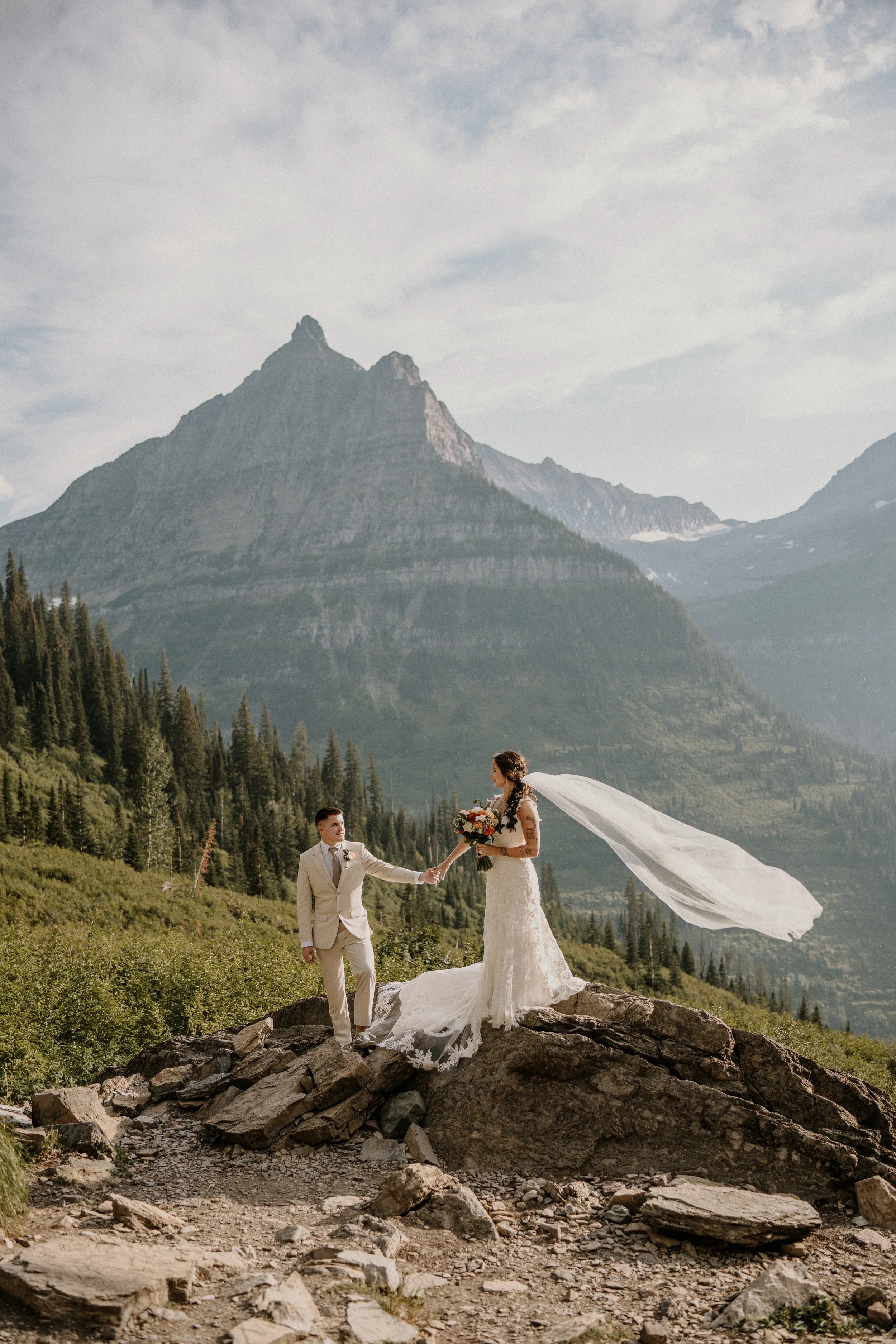 under the larches
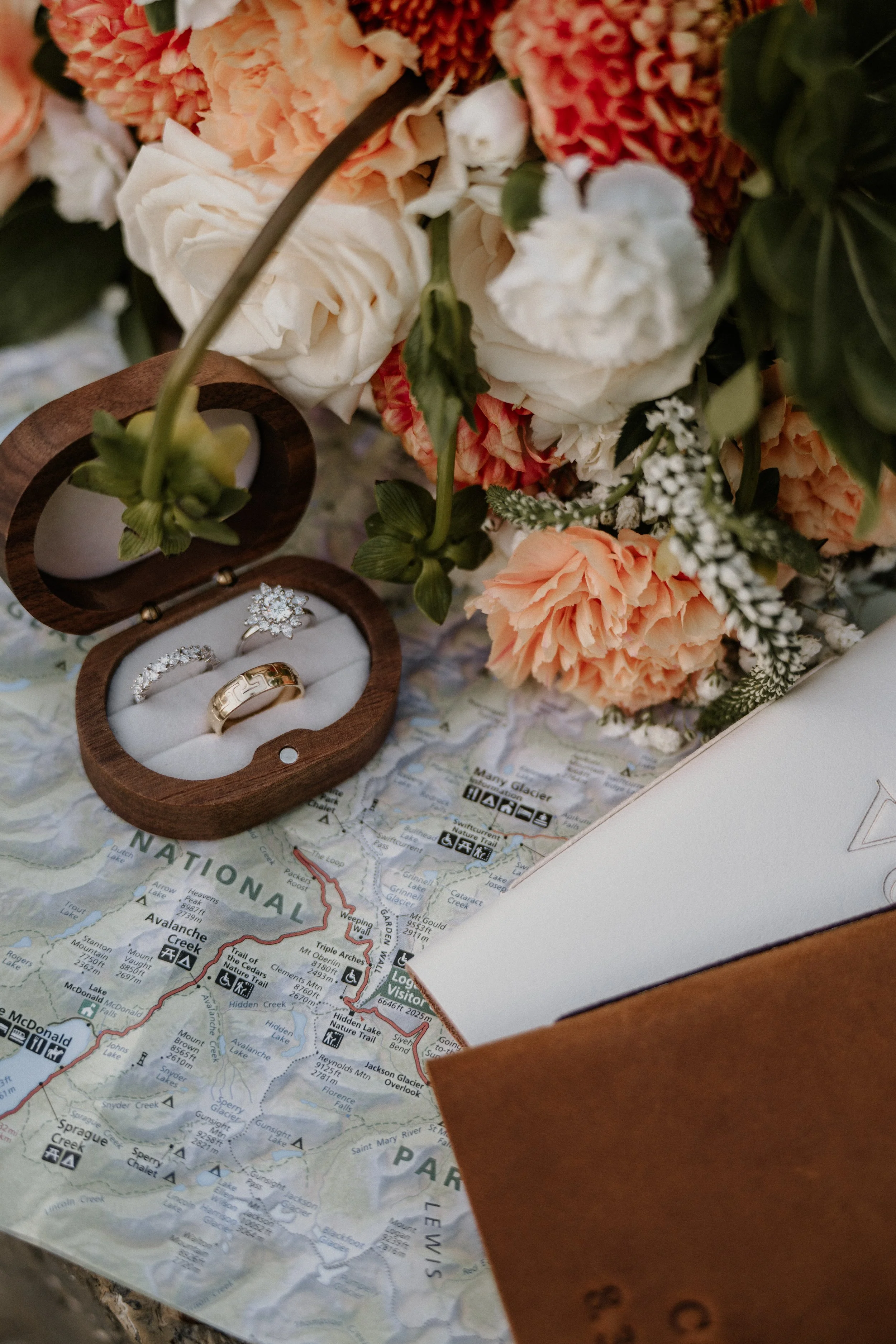 October on the water
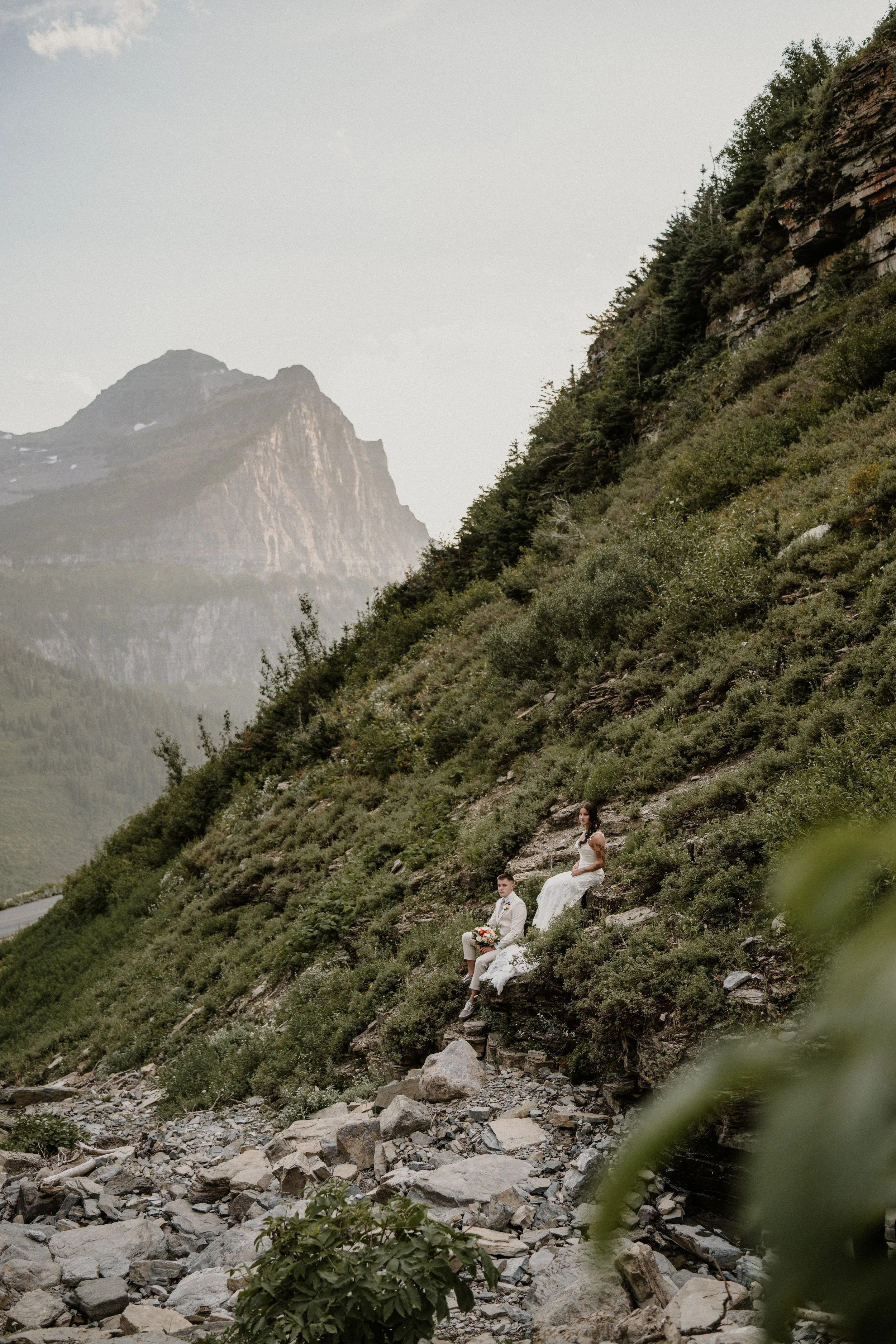 the quiet part
When fall actually happens here
Fall in Glacier runs, roughly, from the second week of September through the first week of November, and it is really two seasons stacked on top of each other. First the aspens and cottonwoods go amber through late September and early October, mostly on the east side and along the valley floors. Then the western larch takes over: a conifer that breaks the rules, turning its needles a saturated gold in mid to late October before dropping them for winter. For about two weeks, the low ridgelines around Lake McDonald and the North Fork look lit from the inside.
If you want the single most useful sentence in this whole guide, it is this one: aim for the second half of October if larches are the dream, and aim for late September if you want warmer air, wider road access, and gold aspens against still-green mountains.
Why I keep pointing couples toward fall
I photograph this park in all four seasons, and I love each one for different reasons. But fall gives an elopement things no other season can, and most of them have nothing to do with the leaves.
This is the photographer's reason, and it might be the best one. In July the sun climbs high and harsh by mid morning. In October it never really does. It slides across the sky at a low angle all day long, which means that warm, directional, golden-hour kind of light lasts for hours instead of minutes. Add the first snow on the peaks catching alpenglow, and my moody, earthy editing style barely has to lift a finger.
Glacier is one of the few places in the country where entire hillsides of conifers turn gold. Western larch, called tamarack by half the valley, holds peak color for roughly two to three weeks in mid to late October. Standing under a backlit larch while the needles drift down is the closest thing I know to standing inside a snow globe filled with gold.
By mid October the peaks usually carry their first white while the valleys are still burning gold. That layered contrast (snow up high, larch below, dark lake in front) is a composition that only exists in fall. You cannot order it in July at any price.
Summer weekends can push thousands of cars through the west entrance before lunch. By mid October, a morning at Lake McDonald can feel like the park has been rented out for the two of you. Quiet matters for photographs, but it matters more for vows. You will actually hear each other say them.
September is the elk rut. On the east side around St. Mary, bugling rolls across the valleys at dawn and dusk, a sound somewhere between a flute and a ghost. Couples assume I am exaggerating right up until they hear it during their first look.
In July, sunset lands close to ten at night and your dinner reservation rarely survives it. In October, last light falls between roughly six fifteen and seven thirty depending on the week, which means we finish portraits and you are sitting down to a warm meal in Whitefish by eight. A fall elopement day feels slower because it literally is.
Lodging opens up, from lakeside cabins to the historic stays that book out a year ahead for summer. Great vendors have real availability. Permit dates are easier to land. And two quiet bonuses: the mosquitoes are long gone, and lake levels drop through fall, so shorelines widen into proper beaches. I wrote more about how the park's water behaves through the year in my Glacier water guide.
Fall in Glacier, month by month
Every week of the season has its own personality. Here is how I would describe each window to a couple sitting across from me with a calendar open.
Summer's encore. Warm afternoons in the sixties and low seventies, gold creeping into the underbrush, elk bugling on the east side at first light. Nearly the whole park is still open (minus Two Medicine this year), while the crowds thin noticeably after Labor Day. The historic hotels start closing for the season around the middle of the month.
best for: fall's quiet with summer's accessAspen season. Cottonwoods along the lakes and the aspen stands near St. Mary go amber, and Going-to-the-Sun Road is usually still open all the way over Logan Pass. Days often land in the fifties, nights dip below freezing, and the park empties out a little more each week.
best for: color variety and the widest choice of locationsLarch season. The main event. Peak gold usually arrives in the third and fourth weeks of October around Lake McDonald, the North Fork, and the west side ridges. The alpine section of Going-to-the-Sun Road closes for the season around the third Monday of October (earlier if a storm beats it there), so we build these days around the lower west side, which is exactly where the larches live anyway.
best for: the photographs you have been picturing this whole timeThe moody coda. Fallen needles carpet the trails gold, fog pools over Lake McDonald at dawn, and the first real snows dust everything above four thousand feet. Clocks fall back on November first, pulling sunset to around five fifteen. Services are minimal and the weather calls the shots, but for a certain kind of couple this is the most cinematic window of the entire year.
best for: small, flexible, snow-curious elopementsWhere fall does its best work
Plenty of Glacier locations are beautiful year round. These are the ones that are specifically better in fall, chosen for color, access, and how they actually feel with just the two of you standing there. Every one of them is 2026-accurate.
Bowman Lake & the North Fork
Access: typically into early November, weather dependingIf larches are the reason you are coming, this is the pilgrimage. The drive up through Polebridge passes through some of the densest larch forest in the park, and by late October the far shore of Bowman reflects a wall of gold. The dirt road in is washboarded and slow, which is precisely why you will have it nearly to yourselves. Stop at the Polebridge Mercantile for a huckleberry bear claw on the way; I consider this step non negotiable. For fall 2026, utility work begins near the ranger station in October, but the park has confirmed access to Bowman and Kintla is unaffected.
Lake McDonald's East Shore & Rocky Point
Access: year roundThe reliable heart of a fall elopement. The road along the lake stays open all year, the pebble shorelines widen as water levels drop, and the ridges above Apgar go gold with larch. Rocky Point, a short and easy trail near the Fish Creek area, gives you the full sweep of the lake with color rising on both sides. This is my favorite plan B in rough weather and my favorite plan A in good weather.
St. Mary & Wild Goose Island
Access: while the east side of Going-to-the-Sun Road is open, typically into mid OctoberThe east side does aspens the way the west side does larches. Through late September and early October, the hills around St. Mary Lake turn amber, and the Wild Goose Island overlook (possibly the most photographed view in Montana) puts on a fall costume that very few visitors ever see. Come at sunrise: the wind is calmer, the elk are talking, and the tour buses are done for the year.
Many Glacier, Back for 2026
Access: road typically open into late October; hotel closes mid SeptemberAfter two construction seasons, the valley people call the Switzerland of North America is fully open again, with brand new parking. Here is the trick: come after the hotel closes in mid September, when the valley empties out but the road is still open. Moose in the willows, bighorn on the slopes, and Grinnell Point going copper at last light. Keep an eye on the park's alerts page, since the next phase of utility work near the hotel could begin as soon as late fall 2026.
The Middle Fork & Marias Pass Corridor
Access: year roundMy late season wildcard. Highway 2 wraps the park's southern edge and never closes, with wide river bars, larch flats, and mountain walls that feel like Glacier because they are Glacier. When a November storm shuts down everything else, this corridor, together with the year round stretch along Lake McDonald, is how we still get you married among the mountains instead of in a parking lot.
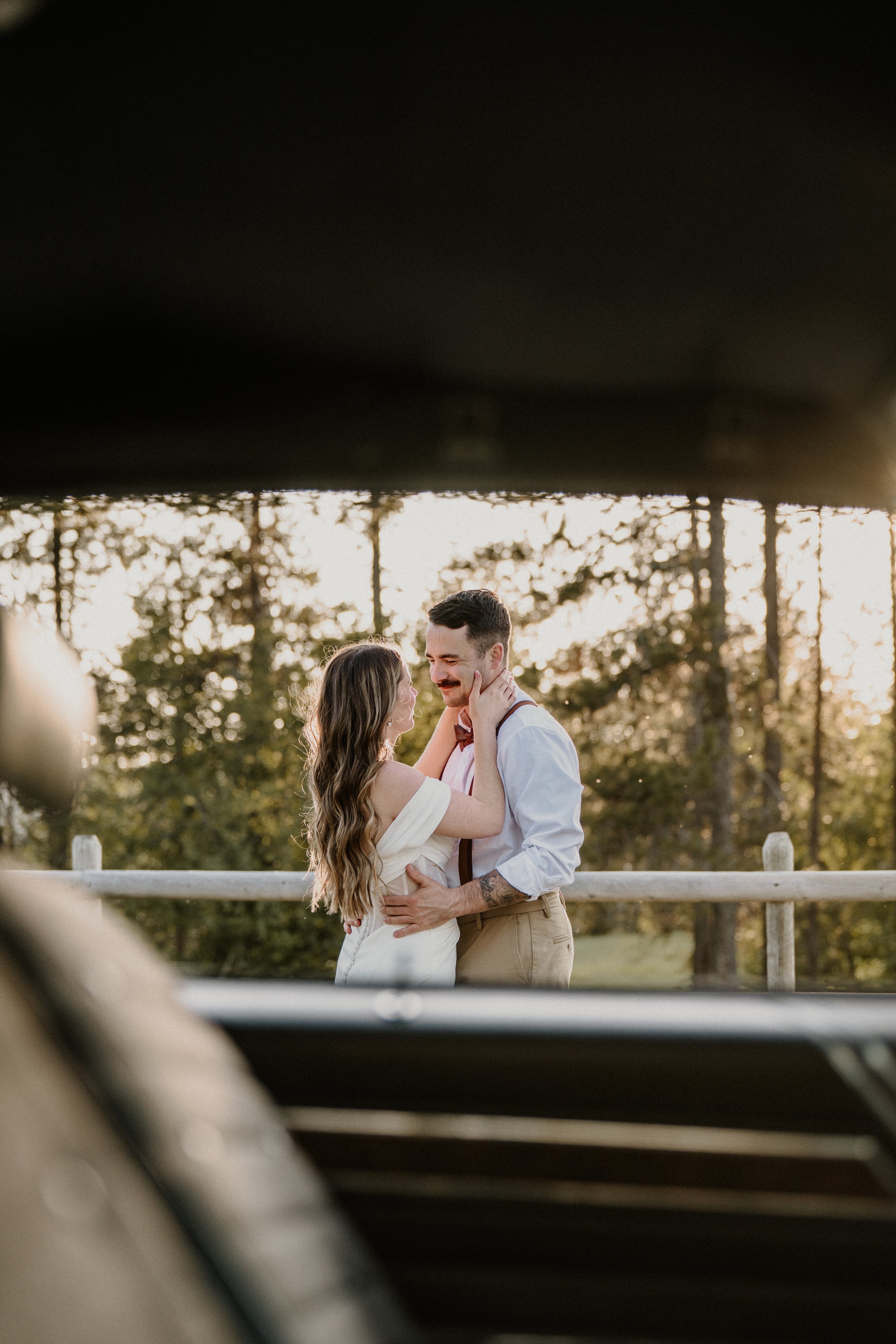 gold season
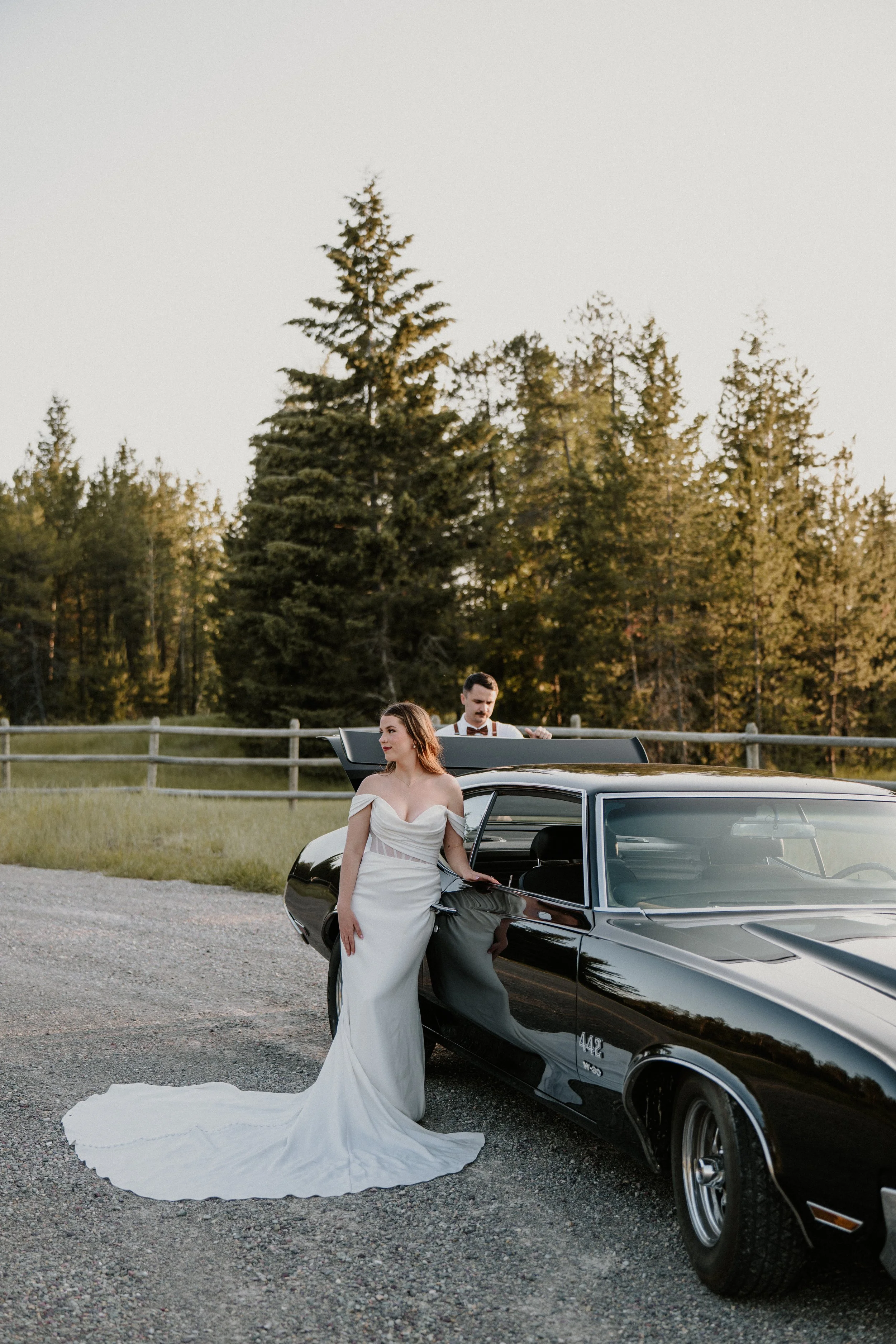 off the road a little
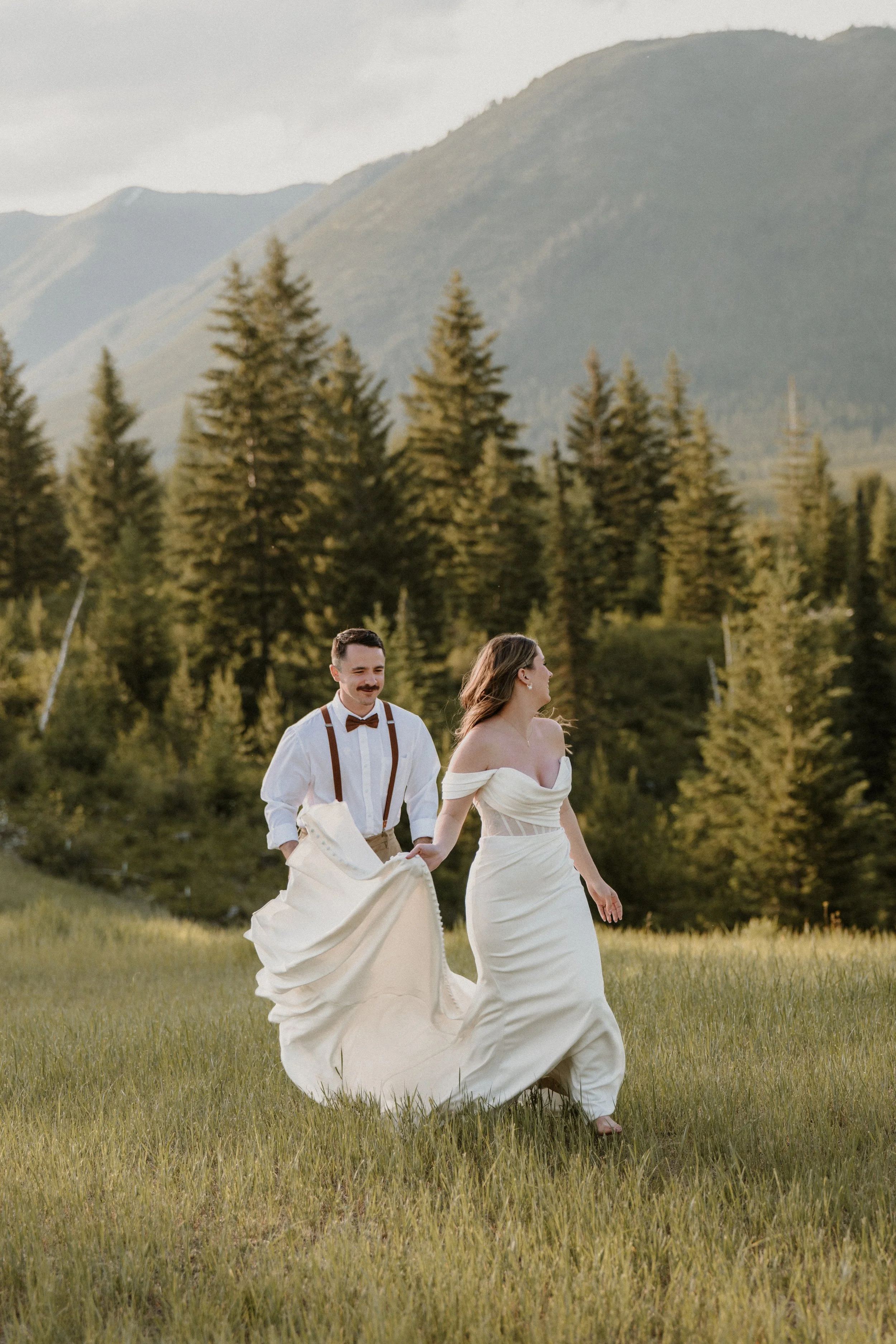 last light
The honest part
I clearly love this season, but you are trusting me with your wedding day, so you deserve the whole picture. Here is what fall asks of you in return.
The weather is a coin flip with two beautiful faces. A sixty degree bluebird afternoon and a sideways snow squall are both completely normal for mid October, occasionally on the same day. This is why every fall couple of mine gets a real plan B, not a vague one: a specific lower-elevation backup location, an indoor option in Whitefish or Kalispell, and a timeline with slack built into it. And if snow shows up, we do not fight it. Snow on a fall elopement is a gift wearing a disguise.
Roads close on the mountain's schedule, not yours. The alpine section of Going-to-the-Sun Road is done by late October at the very latest, and often earlier. The fix is simple: we never build your day around anything that requires Logan Pass after the first week of October.
The park gets sleepy. Lodges, boat tours, rentals, and most guided activities wind down between mid September and mid October. Your ceremony will not notice. Your four day Montana trip might, so we plan the fun around what is actually open: Whitefish, the hot springs, and the tail end of the Flathead Valley farmers markets.
Short days cut both ways. That civilized six thirty sunset also means less total daylight. By late October we have about ten hours to work with, so timelines get tighter and more intentional. Honestly, I consider that a feature: it forces a day that is about presence instead of logistics.
It is bear season, seriously. Fall is hyperphagia, the stretch when grizzlies and black bears eat nearly around the clock before denning. They are focused on berries, not on you, but we carry bear spray, make noise on trails, and choose spots with good sightlines. My full guide to bear safety in Glacier covers everything your group should know.
A real mid-October elopement day
Here is the shape of a fall Saturday on the west side, drawn from days I have actually photographed. Notice what is missing: alarms before dawn, traffic strategy, and any sense of hurry.
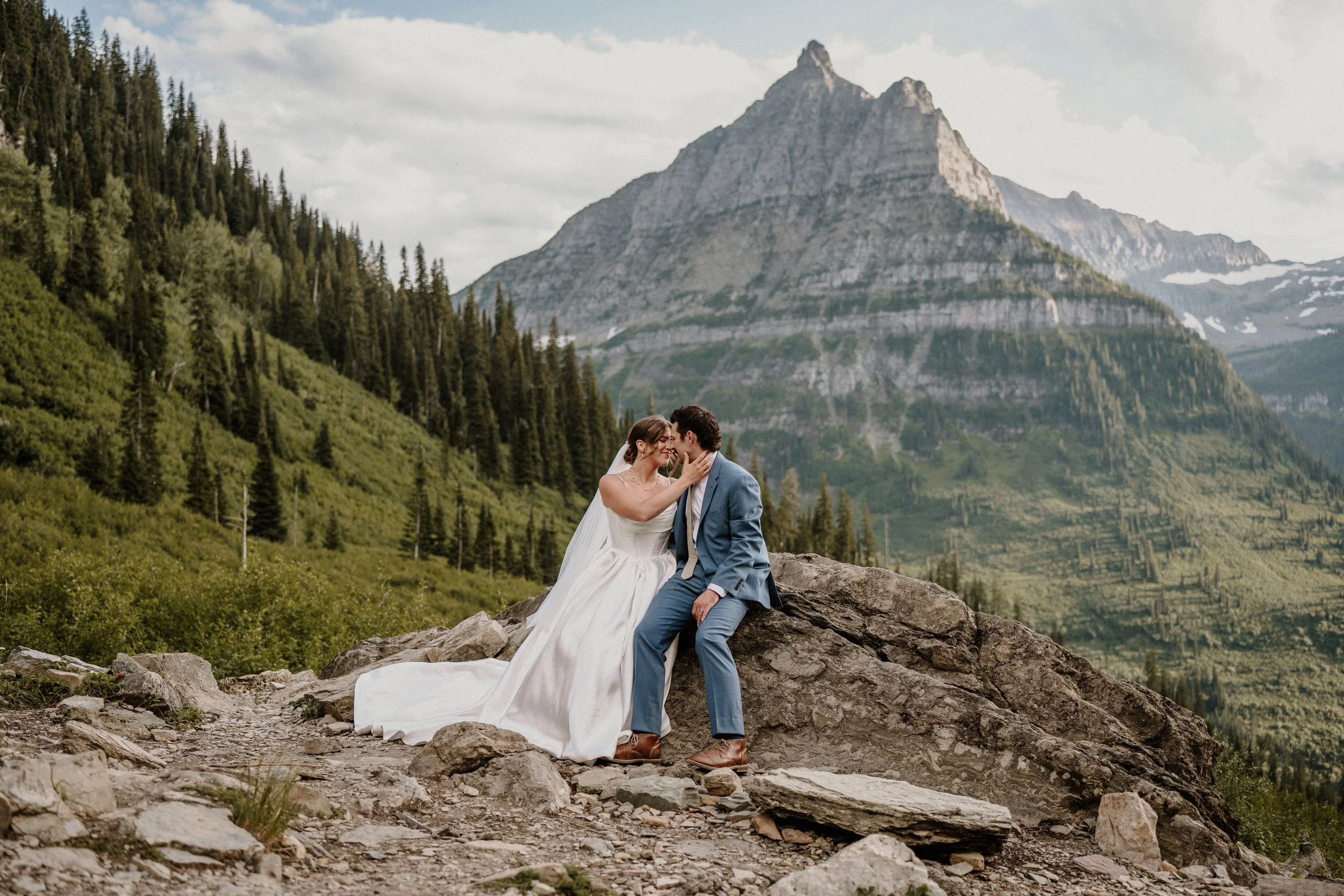 6:45 pm, mid October, nowhere to be
Planning notes from the local
The permit comes first. Every wedding ceremony in Glacier requires a Special Use Permit from the National Park Service, in every season and at every group size. Fall dates are usually less competitive than summer, but each location has its own group limits and quirks. My complete Glacier wedding permit guide walks through cost, timing, and locations, and when you book a Glacier elopement with me, we handle the process together.
Chase the window, not the date. If larches are the priority, I encourage couples to hold a flexible two or three day window in the second half of October rather than a single fixed date. Trees and weather do not read invitations, and a little flexibility is the cheapest insurance you can buy.
Base yourselves well. West Glacier, Whitefish, or Columbia Falls for west side plans; St. Mary for the east side while it is open. Fall unlocks cabins and historic stays that are simply unbookable in July, though the best ones for peak larch weekends still go early once people catch on.
Dress for the day you will actually have. Thermal layers that disappear under a dress or suit, boots for the shoreline with nicer shoes in a bag, a long coat that deserves to be in the photos, wool socks, hand warmers. Cold couples look cold. Warm couples look like the cover of the story they are living.
Want the whole system? I poured ten years of scouting notes, timelines, vendor lists, and hard-won logistics into two interactive planning guides, built by hand for this exact corner of Montana.
Every ceremony location with honest pros and cons, permit walkthroughs, interactive timeline and budget builders, and packing lists tuned to Glacier's seasons, fall very much included.
For fall weddings at venues across Kalispell, Whitefish, Bigfork, and the rest of the valley: venues, vendors, timelines, and the local logistics nobody tells you about.
Fall elopement questions I hear the most
When do the larches turn gold in Glacier National Park?
Most years, the western larch reach peak color in the second half of October, roughly the third and fourth weeks, around Lake McDonald, the North Fork, and the park's west side. Some years the show stretches into the first week of November. Aspens and cottonwoods turn earlier, from late September into early October, especially on the east side.
Is Going-to-the-Sun Road open for a fall elopement?
Usually into mid October. The alpine section over Logan Pass typically closes for the season around the third Monday of October, and an early snowstorm can close it sooner. The lower west side along Lake McDonald stays open year round, so a well planned fall elopement never depends on the pass. In 2026 there are no vehicle reservations, and Logan Pass has a three hour parking limit.
Do we need a permit to elope in Glacier in the fall?
Yes. Every wedding ceremony in the park requires a Special Use Permit from the National Park Service, in every season and at every group size. Fall applications are usually less competitive than summer, but locations still carry group size limits, so apply as early as you can.
What happens if it snows on our elopement day?
We celebrate, honestly. Early snow with gold larches is one of the most beautiful combinations Glacier produces. Every fall couple of mine has a built in plan B: a lower elevation backup location, a flexible timeline, and an indoor option nearby. In ten years I have never had fall weather we could not turn into something better than the original plan.
How cold is Glacier in October?
Plan for anything between about 25 and 65 degrees Fahrenheit across a single day. Early October afternoons often sit in the fifties, late October can hold in the thirties and forties, and clear nights drop below freezing all season. Layers under your wedding clothes, warm boots between locations, and hand warmers solve almost all of it.
Is a fall elopement in Glacier cheaper or easier to book?
Generally easier, and often gentler on the budget. Lodging rates drop after peak season, cabins and historic stays have real availability, and quality vendors have more open dates. My own fall calendar has more room than July and August, though peak larch weekends do fill up once couples catch on.
Let's plan your fall elopement in Glacier
If reading this made something in you go quiet and certain, that is usually the sign. Tell me about the two of you and the season you are imagining, and I will bring the local knowledge, the permit help, and a decade spent chasing this exact light. Whoever you are and whoever you love, you are welcome here.
Inquire About Fall Dates See the Elopement Experience