
Big Bend Elopement Guide: What It's Really Like to Get Married on the Going-to-the-Sun Road
Glacier ceremony locations
What it's really like to get married at Big Bend
What the pullout gets right, what the photos leave out, the 10-person rule, the wind, and how I'd plan the day. From a photographer who lives an hour away and has stood there in every kind of weather.
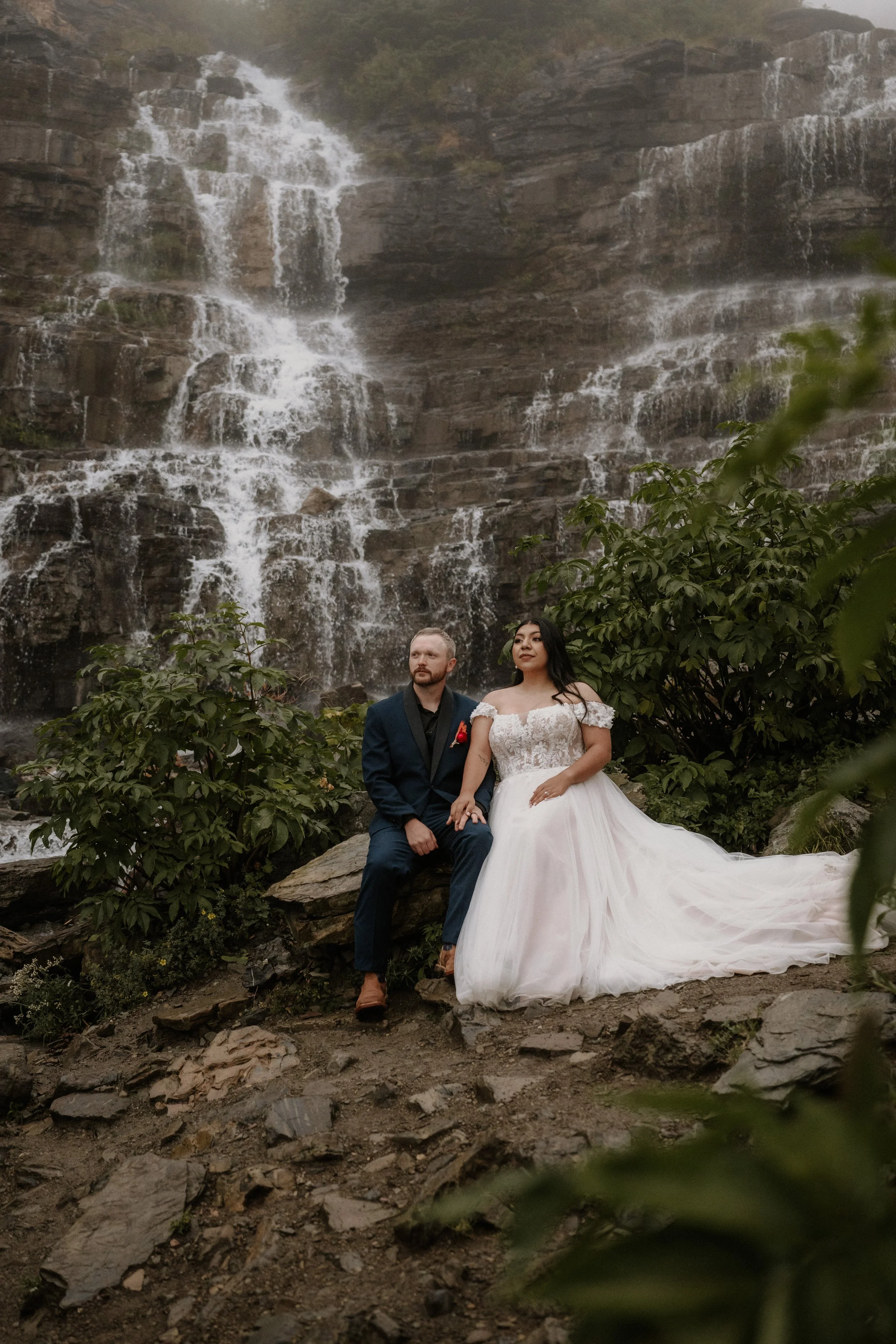
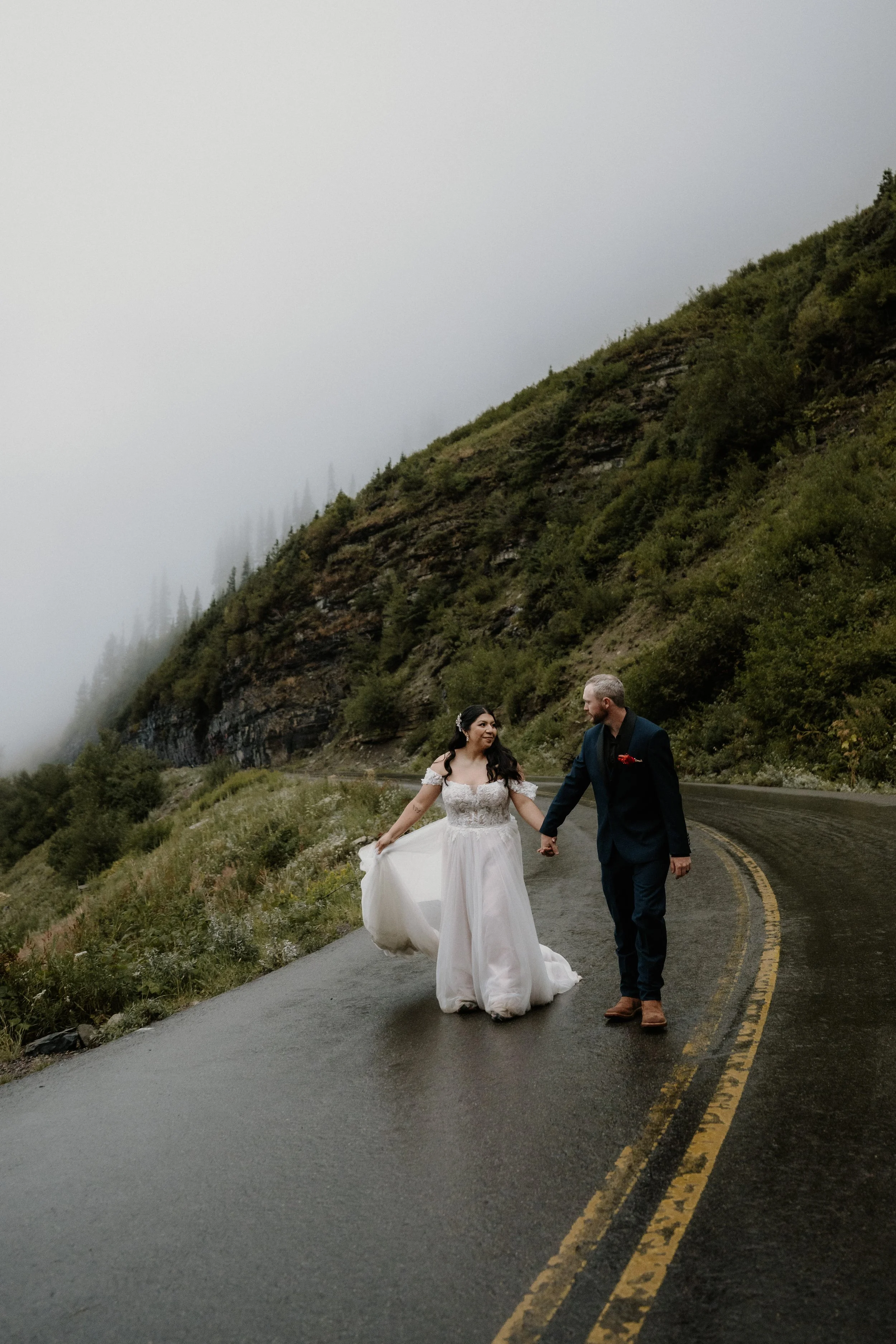
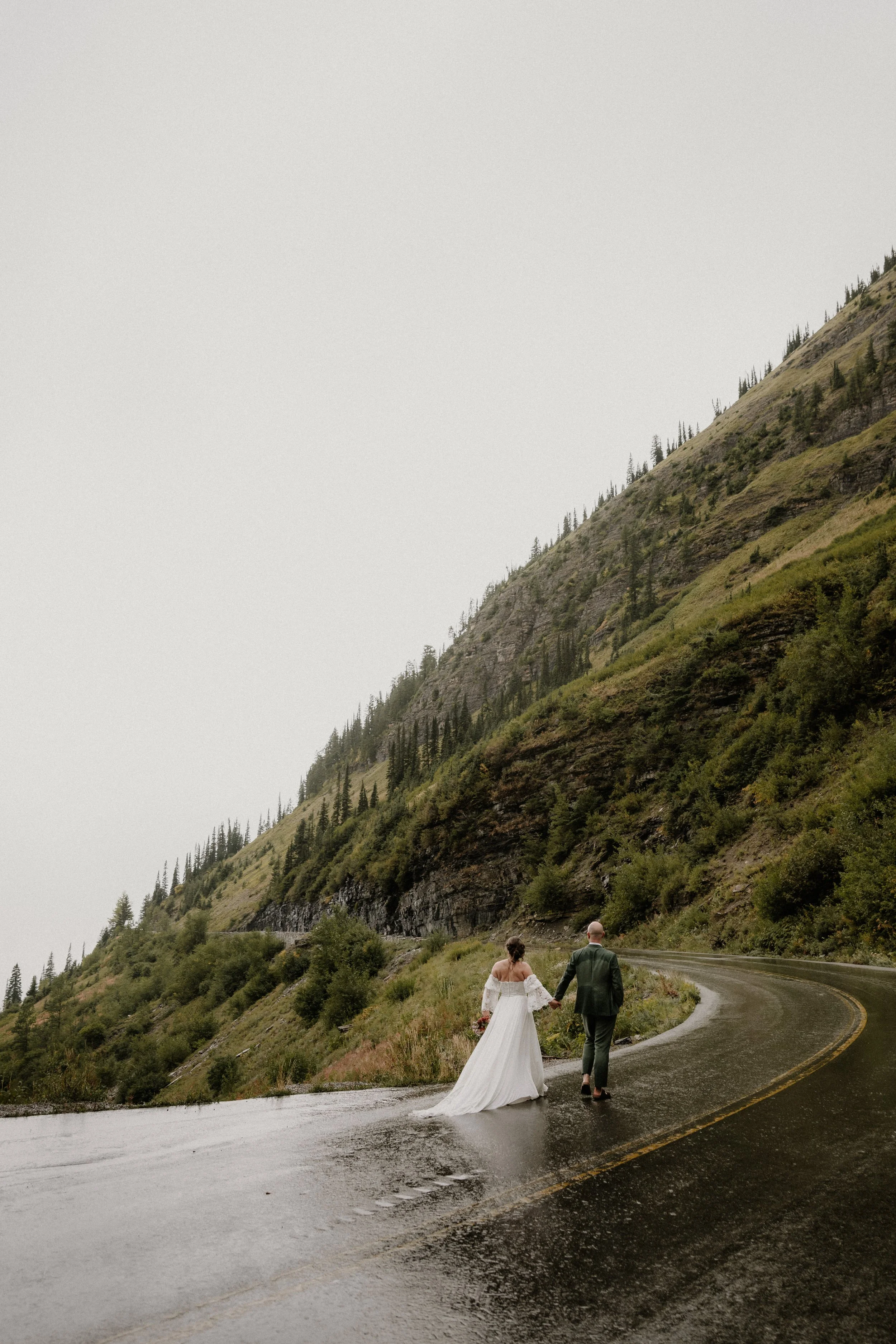
Most couples find Big Bend the same way: a photo of two people at the edge of a mountain road, the whole Logan Creek valley dropping away behind them, and nothing between them and the peaks. Then they send it to me and ask if we can do that.
We can. I've photographed an elopement there, scouted it for proposals, and driven past it more times than I can count on the way to Logan Pass. But I'd rather talk a couple out of Big Bend than have them stand on that pullout on their wedding day wishing someone had been straight with them. It's a roadside stop on an exposed shelf below the pass, in the busiest part of the park, with a 10-person limit and a short season. And the wind has opinions.
So this is the version I'd tell you on a planning call. What the spot gets right, what the photos leave out, how I'd build the day around it, and where else I'd look if it turns out not to be your place.
Location
West side, below Logan Pass
Max participants
10, including you
Ceremony season
Early July to mid September
Bathrooms
Two vault toilets
Parking
Large pullout, fills midday
Walking
None. You park at the view.
Dog friendly
No (park rules)
Best for
Tiny ceremonies, big views, no hiking
What Big Bend gets right
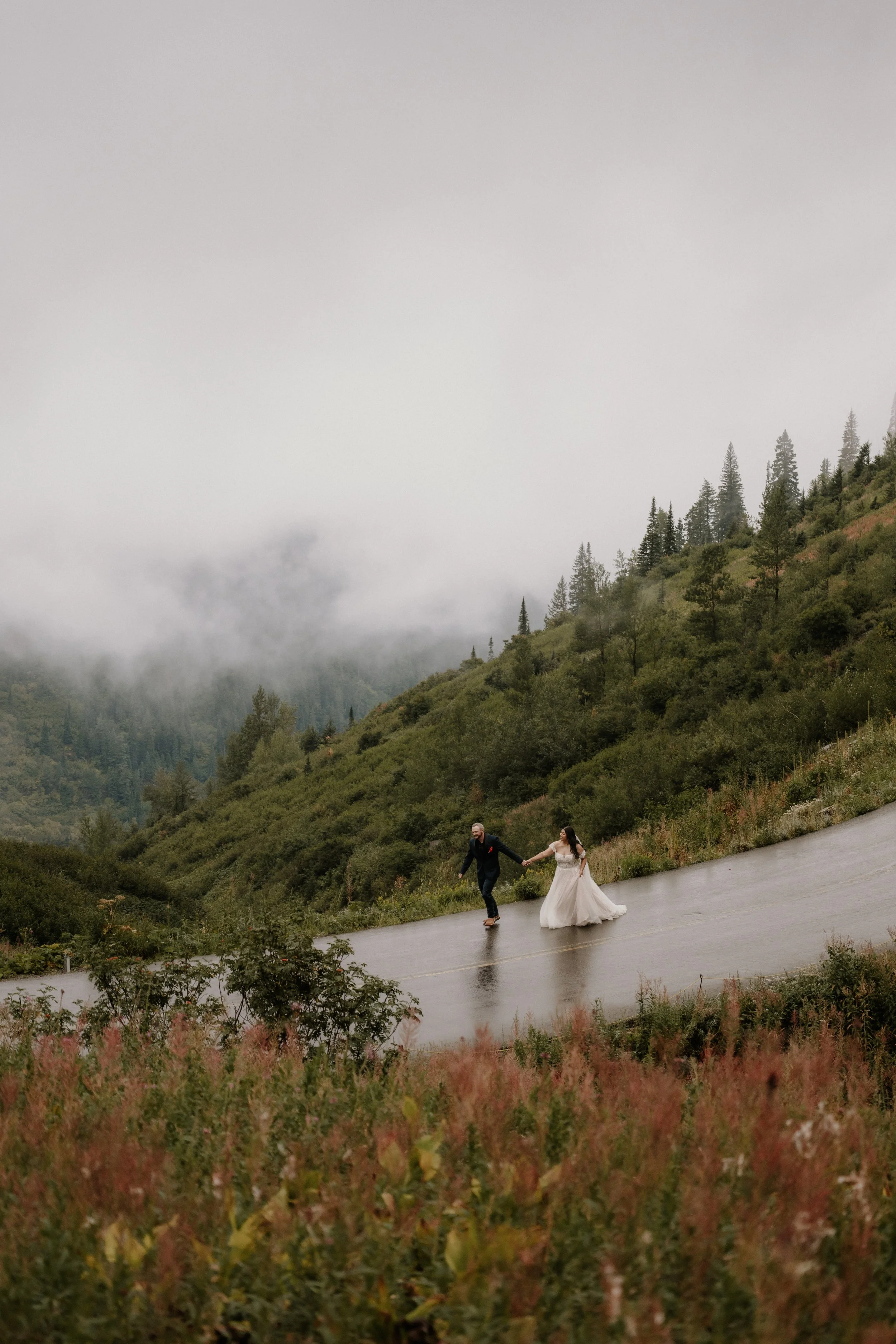
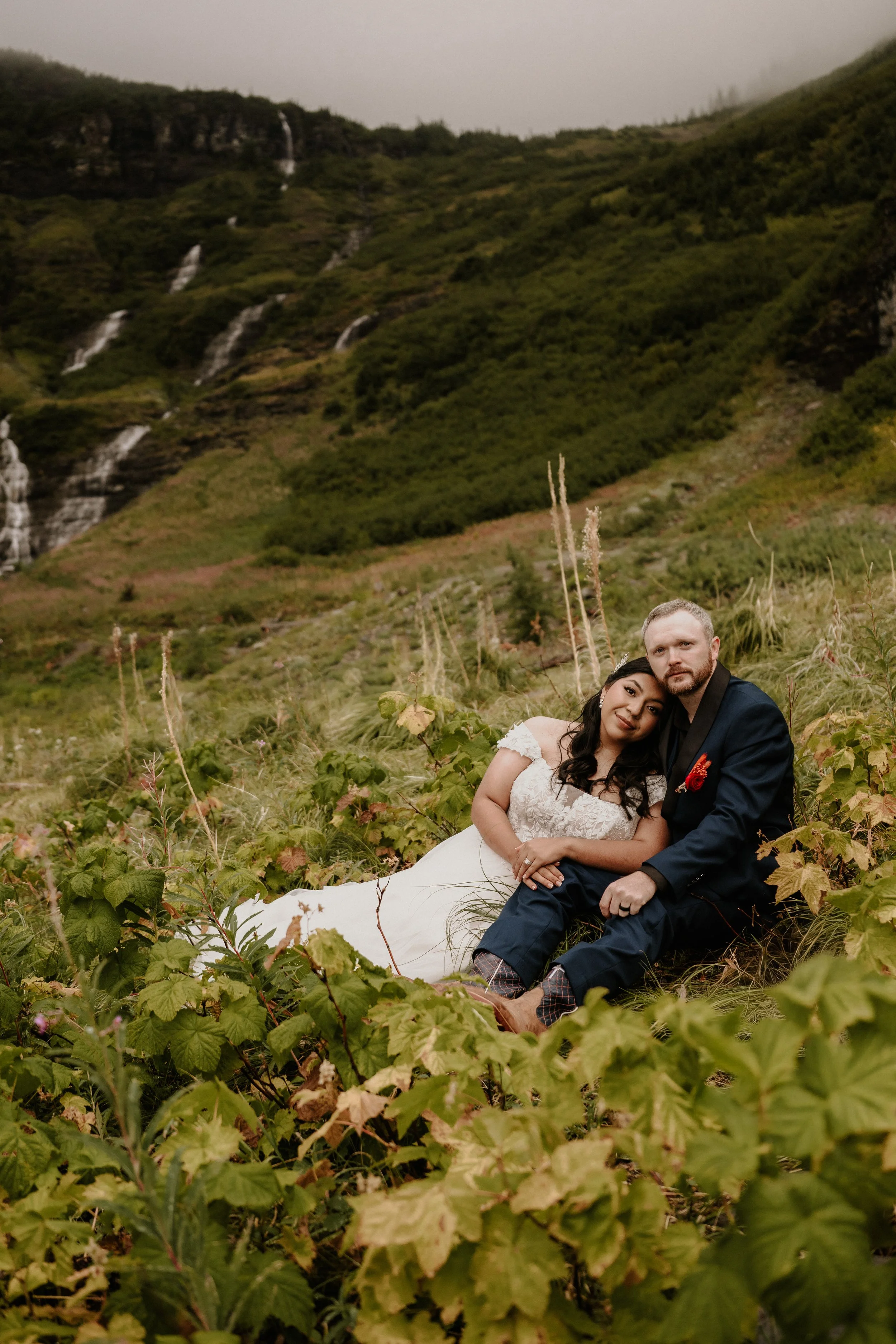
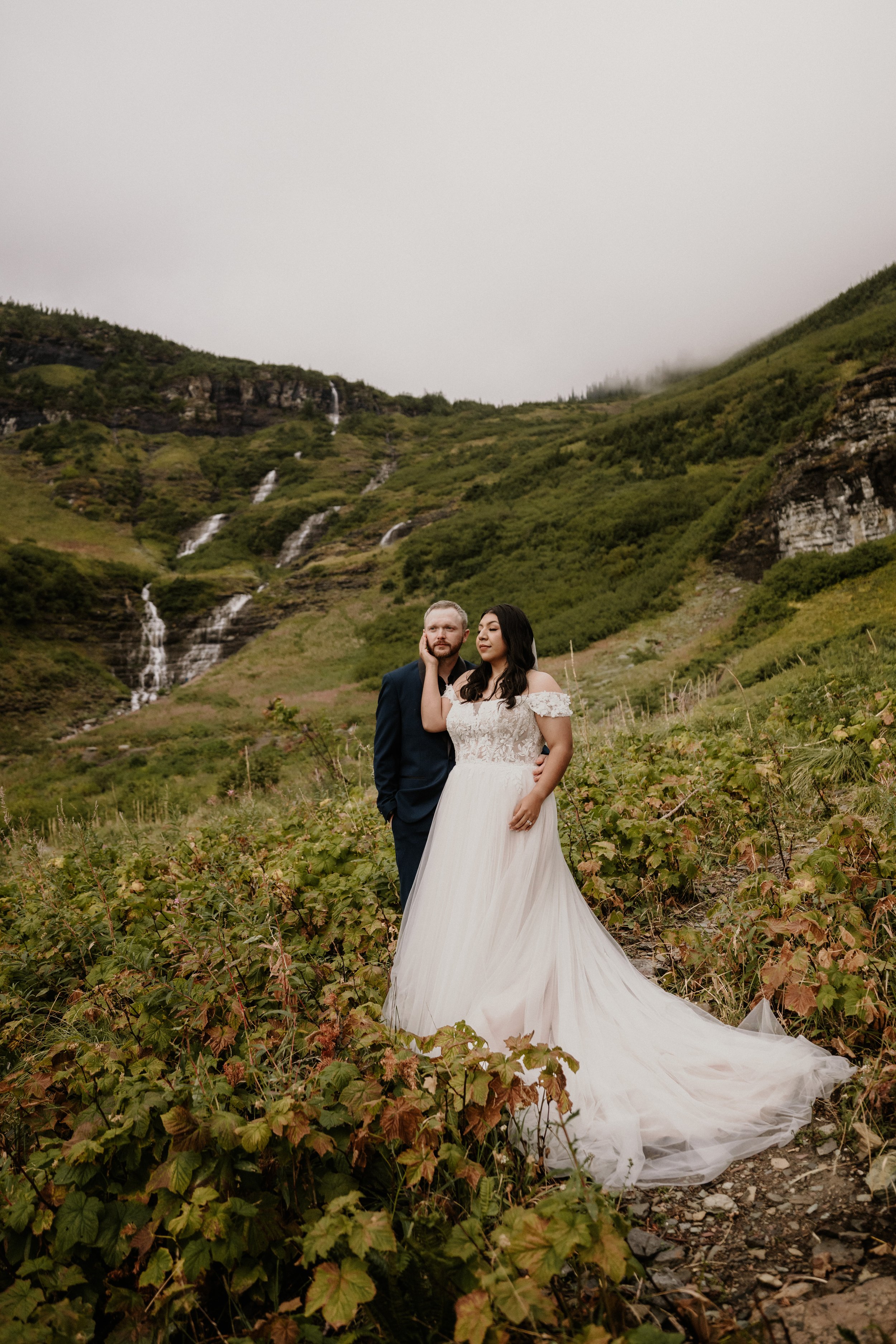
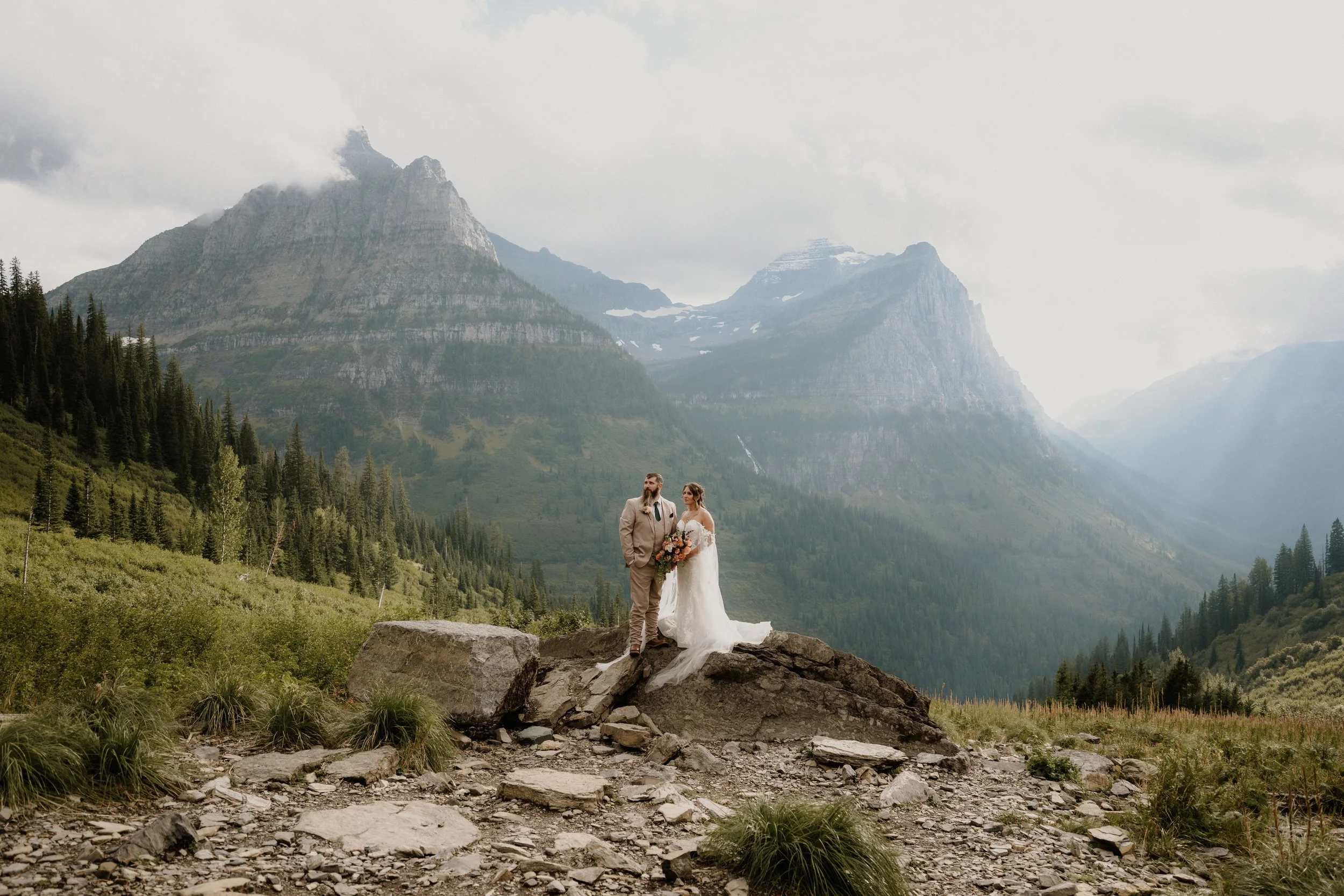
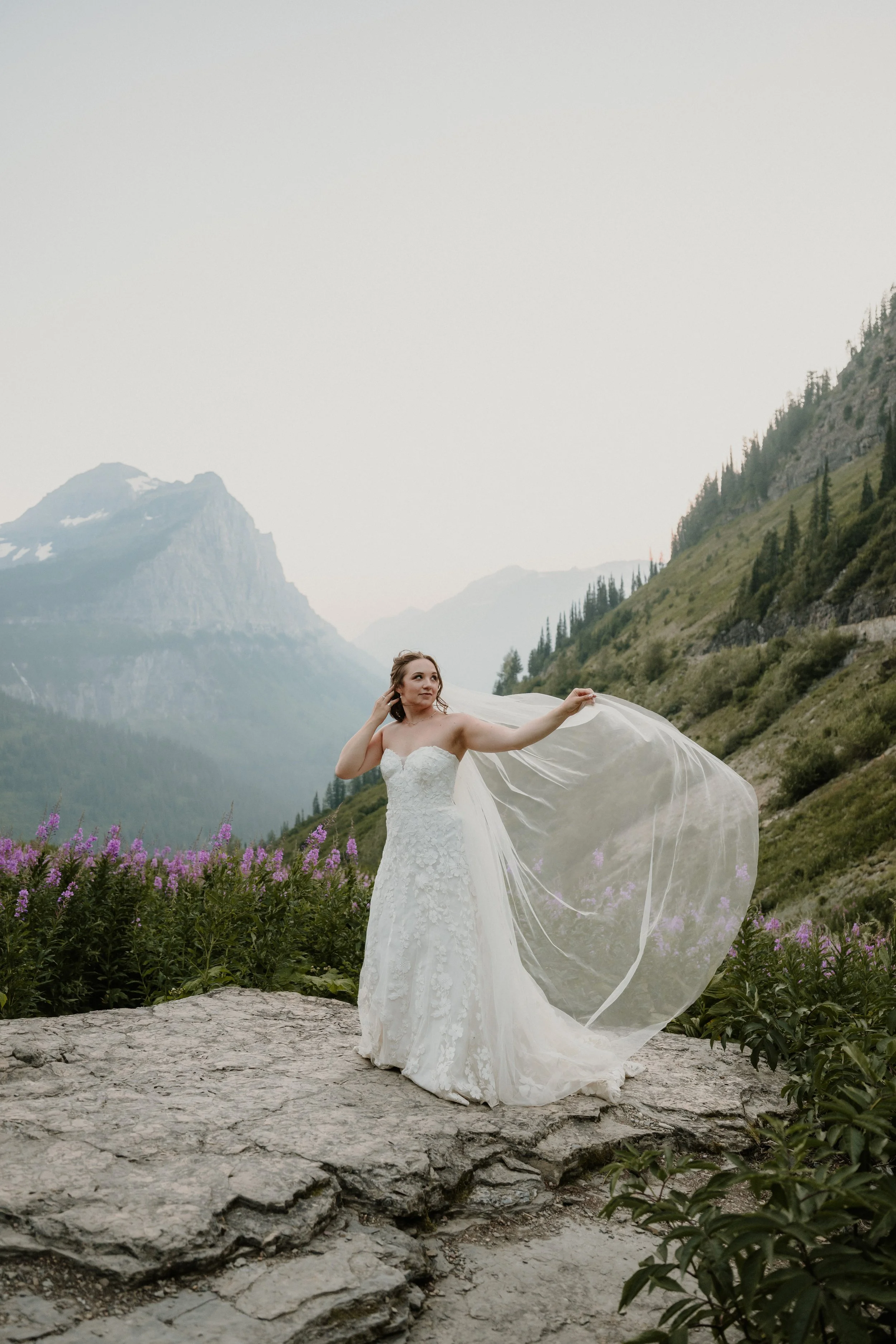
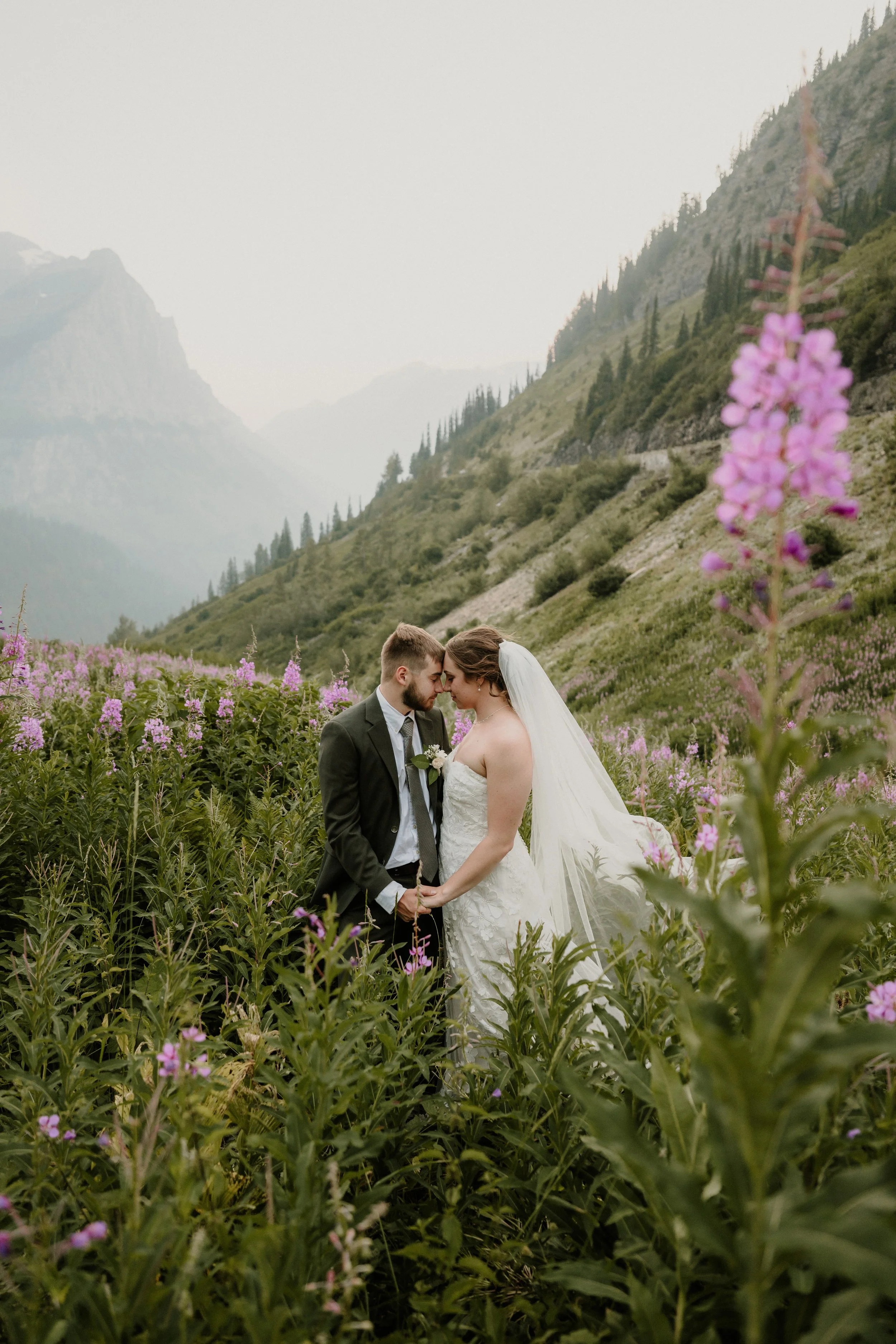
Big Bend is a wide U-shaped curve in the road with a paved pullout on the valley side. You step out of the car and you're already there: Mount Oberlin, Mount Cannon and Heavens Peak across the valley, the road carved into the cliffs below, and in July, beargrass and wildflowers on the slopes around you. There's no hike, no scramble, and no guessing where the view is.
The short version of why it works:
- One of the most recognizable views in Glacier, straight out of the car
- Completely accessible. No walking, so grandparents and guests in dress shoes are fine
- Big, open scenery that makes two people look small in the best way
- Gorgeous side light in the late afternoon and evening
- Wildflowers in July and early August, larch color lower on the road in late September
- Vault toilets right at the pullout
- Minutes from Logan Pass, the Weeping Wall and Bird Woman Falls for more portraits
- The red buses rolling through, which looks as charming in a photo as it sounds
If you want the Glacier you've seen in photos without hiking to it, this is one of the few places that gives you all of it from a parking spot.
What the photos leave out
Every photo of Big Bend is a still frame of a very windy, very busy place. Here's what's happening outside the frame.
The wind
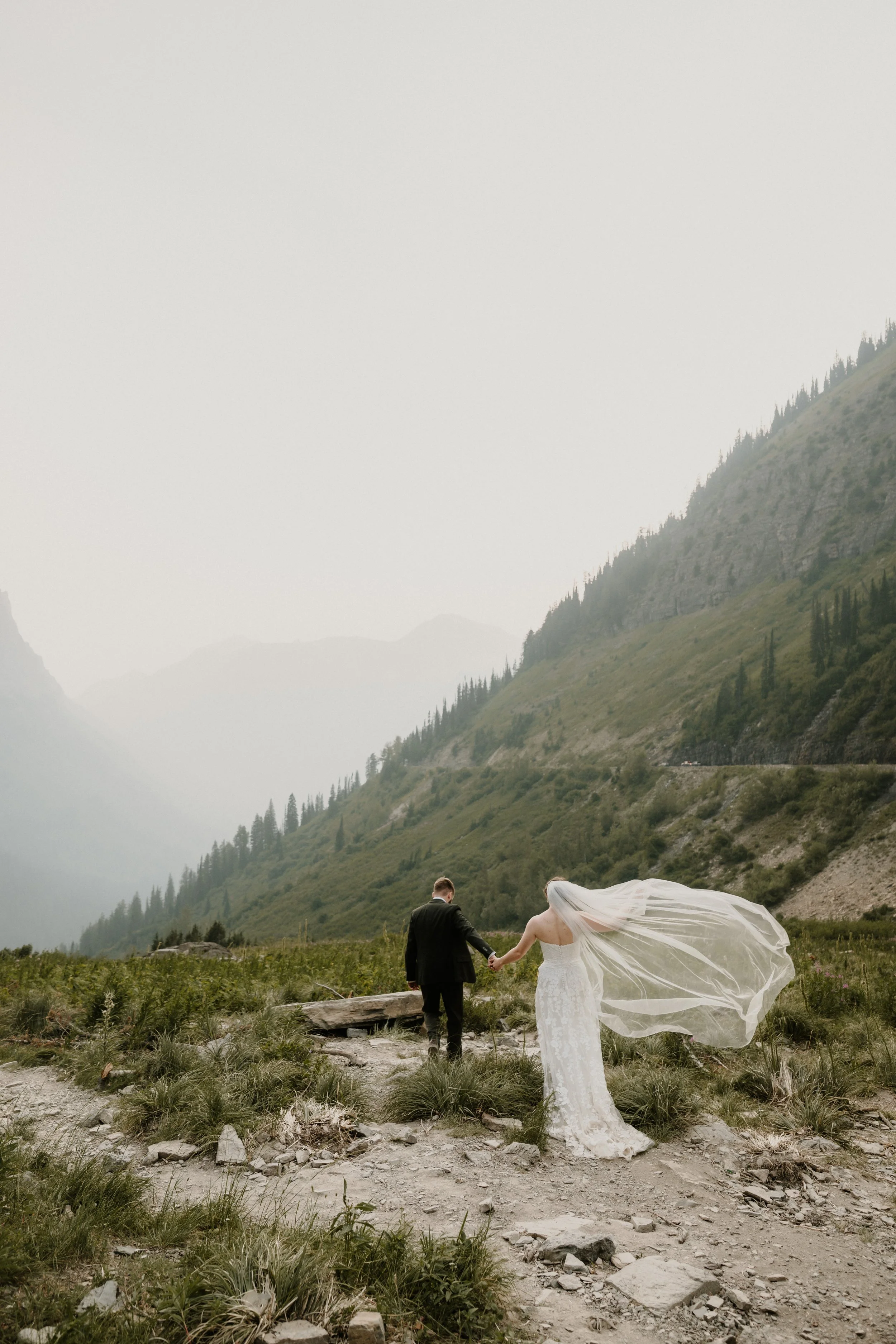
Wind is the first thing I bring up with every couple who asks about Big Bend, because it's the thing that surprises people. The pullout sits on an open shelf with nothing to break it. Some evenings are dead calm. Many are not.
I photographed Janet and Jordan's elopement here. The road had just opened for the season, it was bitterly cold, and the wind did not let up. They were incredible about it, and the photos are some of my favorites, but it changes the experience. Expect:
- Guests having trouble hearing your vows
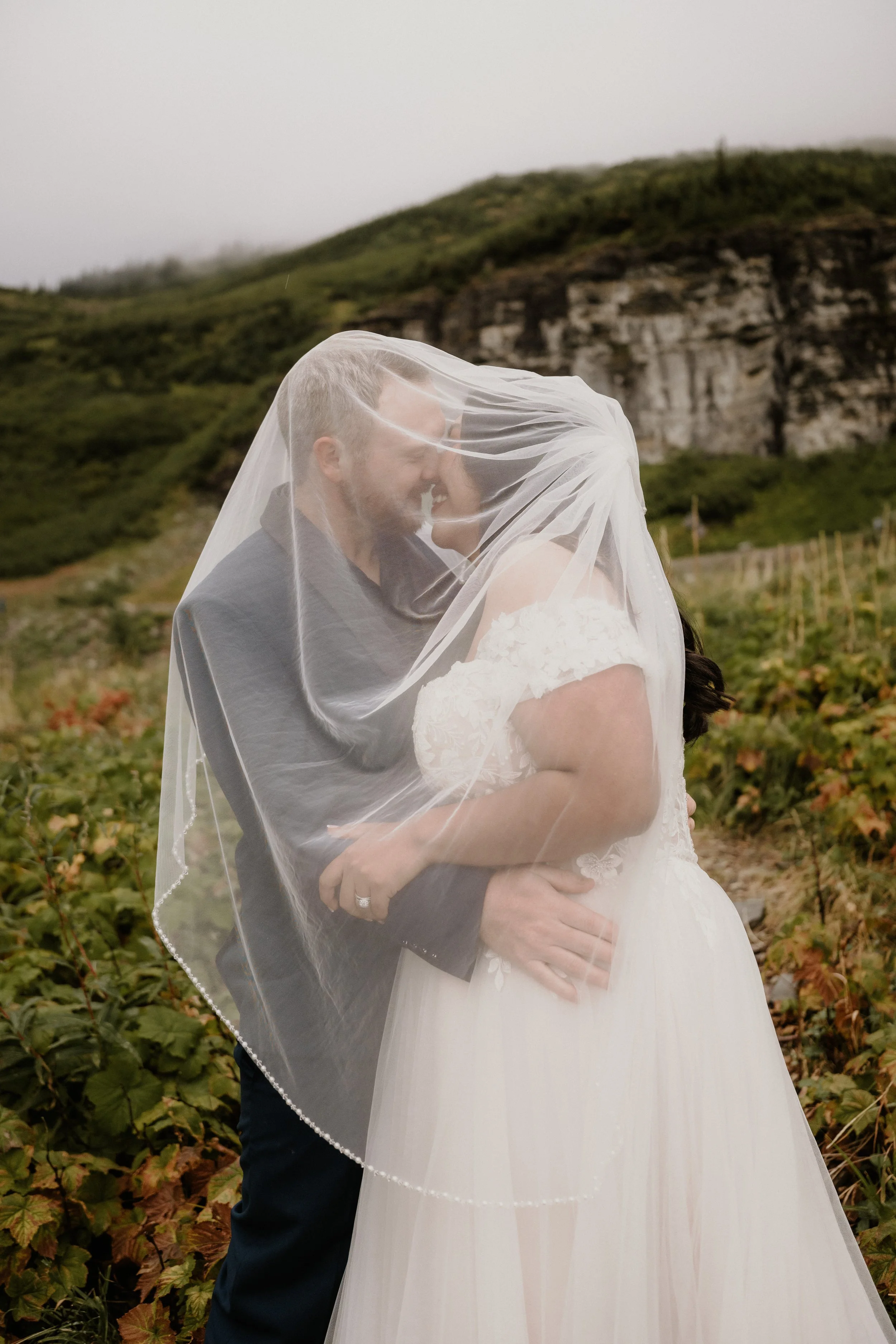
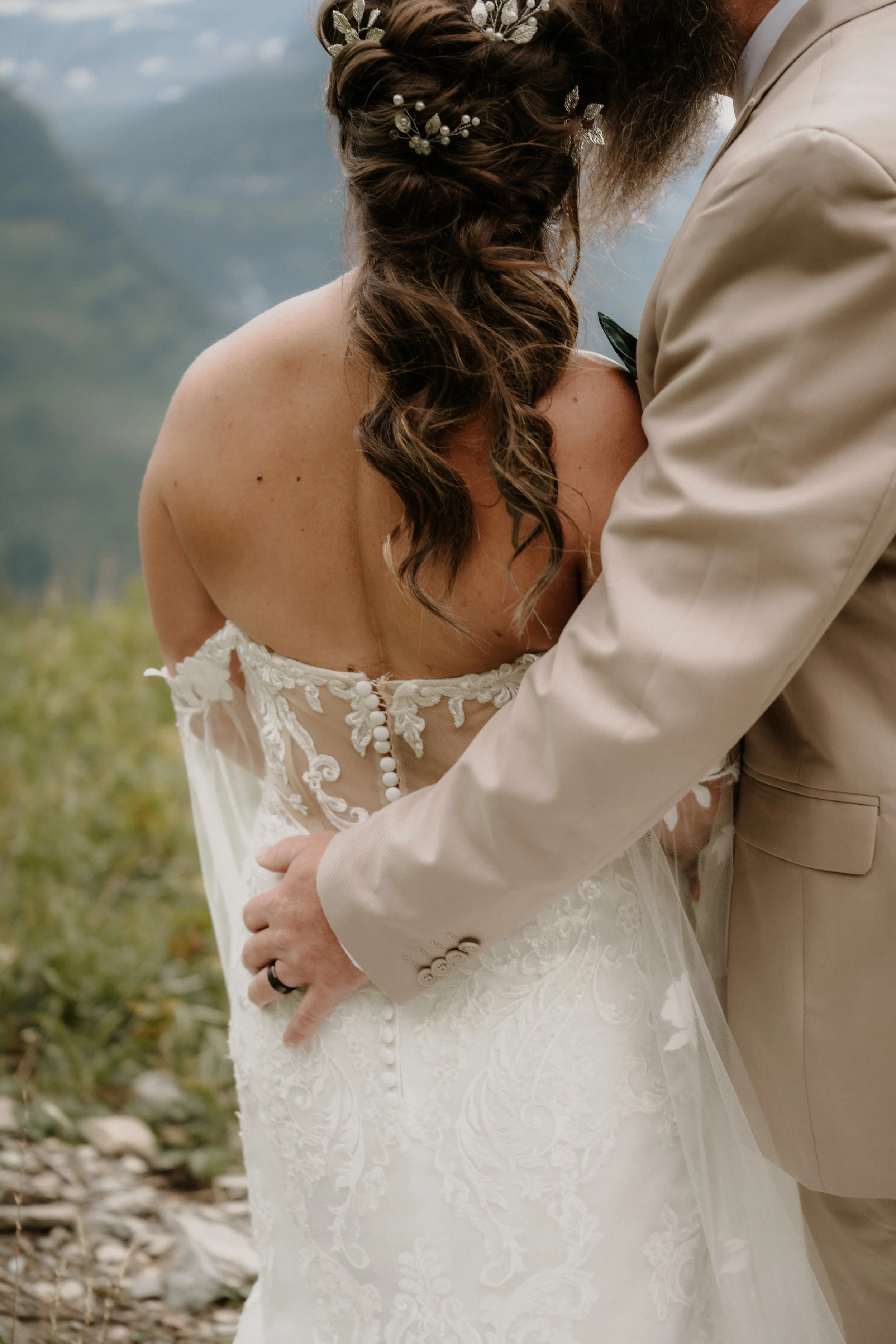
- A veil doing whatever it wants (good for photos, bad for staying on your head)
- Hair that will not stay put, no matter the hairspray
- Temperatures that feel much colder than the forecast, even in August
The crowds
The park's own location notes say it plainly: expect other couples and other park visitors. On a July weekend the pullout is full by late morning, people stop to watch, and you may share the space with another ceremony. Most visitors are respectful, and more than a few will cheer for you. But if privacy is at the top of your list, Big Bend is the wrong spot.
The 10-person rule
Big Bend's permit allows 10 participants, and that number includes the two of you. So it's really you plus eight: an officiant, a few family members, maybe a friend or two. Your photographer and the permit holder count too, so confirm the exact math with the park when you apply. If your list is bigger than that, see the alternatives below.
The short alpine season
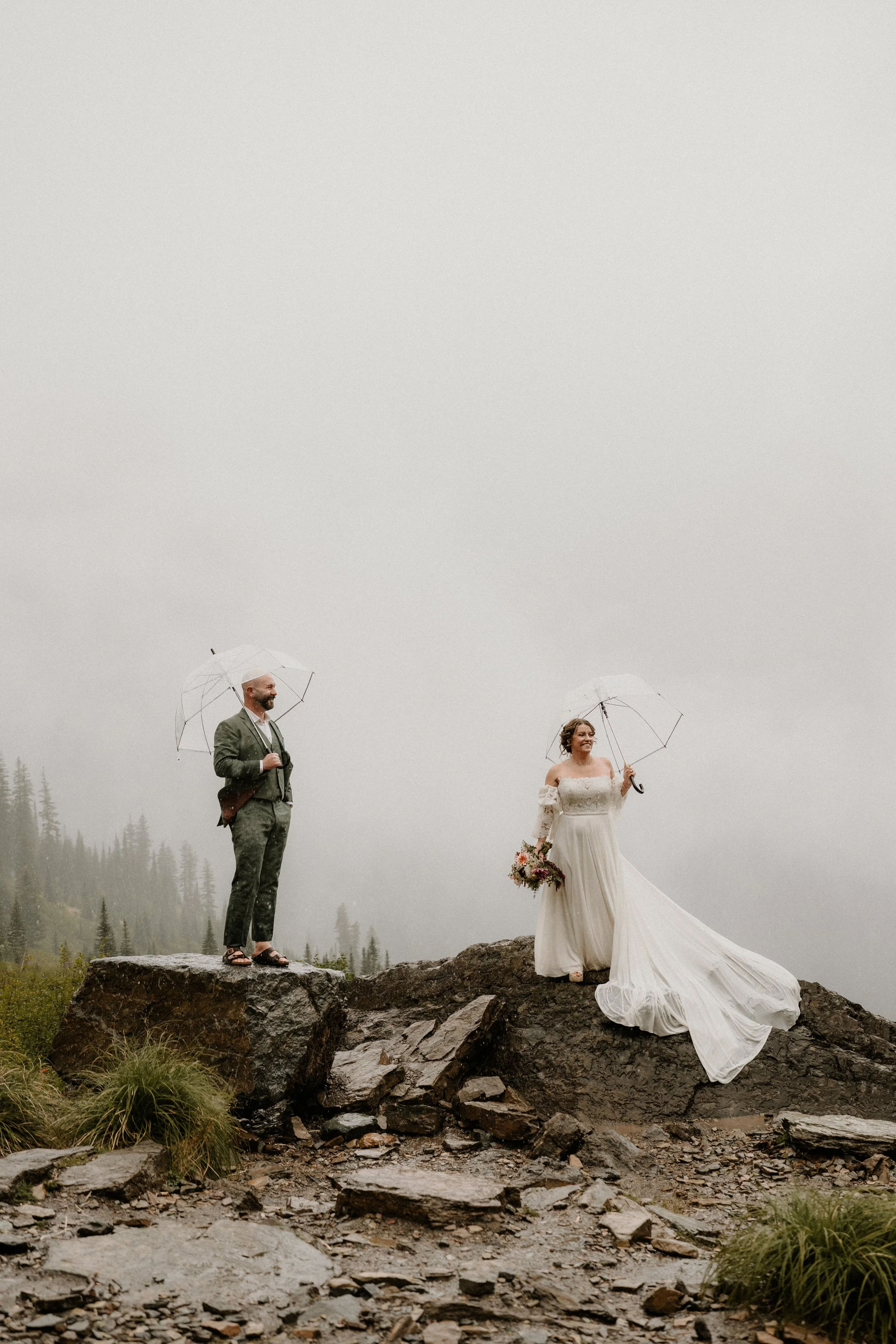
Ceremonies are only permitted from early July to mid September, because that's when the road is reliably open this high up. Even inside that window, snow in September is not unusual, and early July can still have drifts along the road. Plan for cold, bring layers, and stay flexible.
Gravel, not a meadow
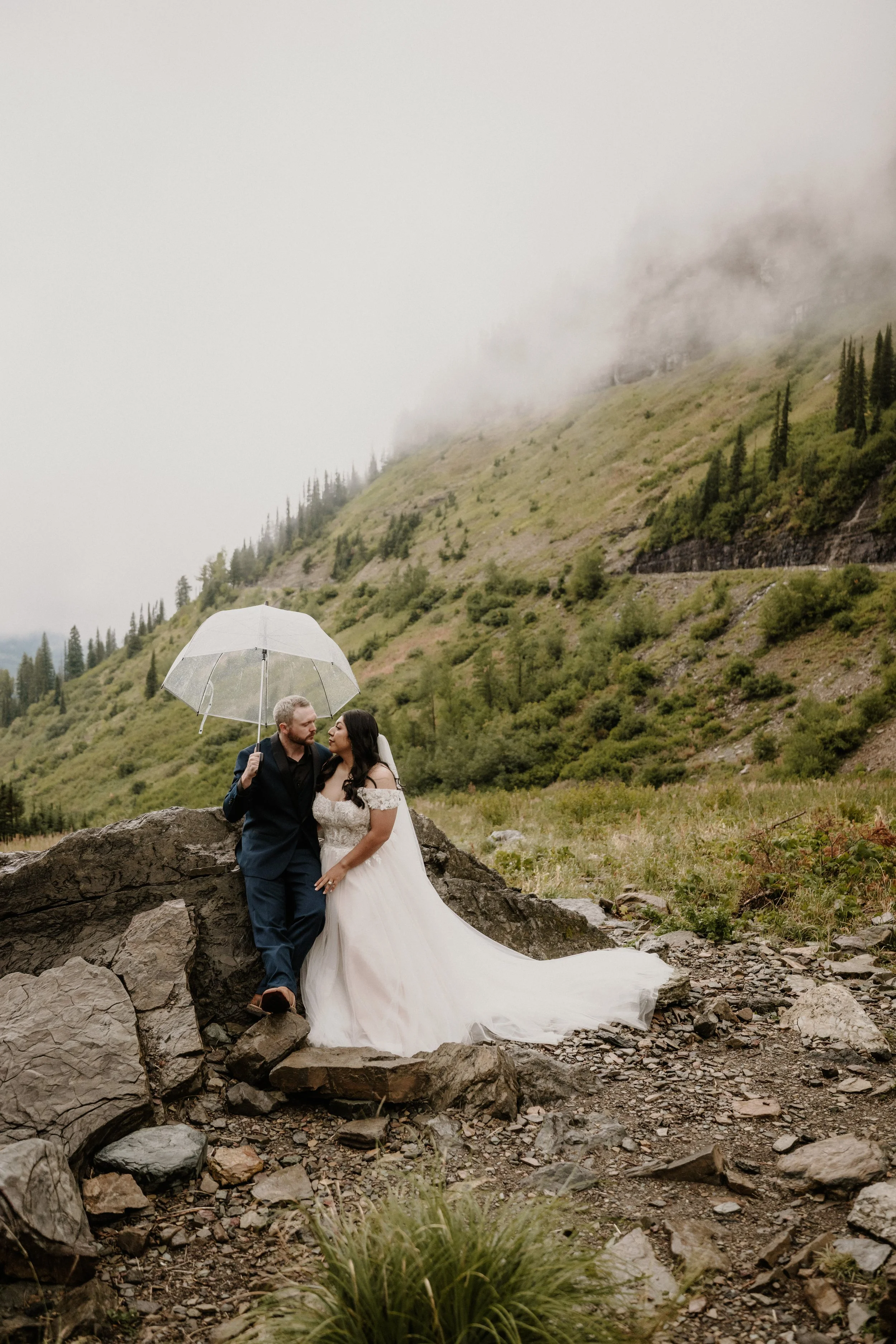
The ceremony area is the developed gravel pull-off, and the park asks that you stay on it. That's great for accessibility (it's wheelchair friendly) and it means no setup beyond what you can hold. No chairs, no arch, no aisle. Just the two of you and the view, which is the whole point.
If your heart is set on Big Bend and the forecast says 40 mph gusts, don't cancel. We can hold the ceremony somewhere more sheltered and come back here for portraits once the vows are done. Portraits take ten minutes. A ceremony in a gale takes forever.
If Big Bend isn't quite it
A trick I use constantly: split the day. Say your vows somewhere calm, where you can hear each other and your guests can hear you. Then drive to Big Bend for portraits. The ceremony gets to feel like a ceremony, and you still leave with the photos that sent you here in the first place.
If the wind, the crowds or the headcount are what's giving you pause, that's usually the answer. And if you're still deciding where the vows should happen, these are the spots I'd compare it to:
Sun Point
The east-side version of Big Bend: a short walk to a rocky point above St. Mary Lake, allowed up to 20 participants, and bathrooms and picnic tables nearby. It's just as windy and nearly as busy, but the extra headcount and the lake make it the first alternative I suggest. Read about Rowan and Matt's surprise proposal at Sun Point to see it in action.
Lake McDonald shoreline spots
The Apgar picnic area shoreline and the 7-mile pullout both sit right on Lake McDonald, allow about 20 participants, and are open far longer than Big Bend. The views are calmer and more intimate than the alpine pullouts, with the peaks across the water instead of in your face. They're also my go-to for shoulder-season and winter elopements.
Split the day
Vows at a lakeshore or picnic area location in the morning, a long lunch somewhere with a patio, then up the road to Big Bend for evening portraits when the light is at its best and the lot has thinned out. It's the plan I suggest most often, and nobody has regretted it yet.
For a wider look at spots across the park, here are my favorite photo locations in Glacier.
Planning your Big Bend elopement
Timing, permits, directions, and where to stay.
Morning or evening?
Evening, for almost everyone. The sun comes across the valley from the west and rakes the peaks from the side, the lot has emptied, and nobody has to do hair and makeup at 3 a.m. One catch: the sun drops behind the ridgeline well before official sunset, so plan to be there an hour or two ahead of it.
Mornings have their case. The pullout is empty, the air is cool, and alpenglow on the peaks is real. But the sun rises behind the mountains, so direct light reaches you late, and a midsummer sunrise means leaving the hotel around 4.
Getting your permit
Like every ceremony location in Glacier, Big Bend needs an approved Special Use Permit from the park. Apply early, especially for July and August, and list a backup location on the application in case your date is taken.
My Glacier wedding permit guide walks through the whole process, and I handle the details with you when you book.
Entry and reservations
Your permit covers the ceremony, not park entry. Everyone still needs an entrance pass, and the Going-to-the-Sun Road has used a vehicle reservation system in some years. Rules change, so check the park's current conditions for your date. I'll flag anything that affects your plan.
From West Glacier
- Enter at the West Entrance
- Follow the Going-to-the-Sun Road about 28 miles, past Lake McDonald, Avalanche and The Loop
- Pass the Weeping Wall. Big Bend is the next big curve
- Plan on 1 to 1.5 hours without stops, longer in July
From Kalispell, add about 45 minutes to West Glacier.
From St. Mary
- Enter at the St. Mary entrance
- Follow the Going-to-the-Sun Road about 21 miles west, up and over Logan Pass
- Big Bend is about 3 miles below the pass on the west side
- Plan on about an hour without stops
Where to stay
For a sunrise ceremony, stay as close as you can: Lake McDonald Lodge or the Apgar area inside the park, or West Glacier just outside the gate. For a sunset ceremony, Whitefish, Columbia Falls and Kalispell all work and give you far more options for dinner afterward. My local's guide to Glacier has more on the towns, and I'm happy to help booked couples narrow it down.
What to wear and bring
A warm layer you can take off for photos, even in August. Shoes that grip, since you'll be on pavement and rock near a drop. Hair ties or pins if you have long hair. A dress that moves with the wind photographs better than one that fights it. Keep rings and anything small zipped away until you need them.
Wildlife and safety
Mountain goats and bighorn sheep show up along this stretch of road, especially near Logan Pass. Give them space. Bears are around too, even near the road, so read my bear safety notes before the trip. At the pullout, stay behind the wall. The drop is real, and I'll never ask you to step past it for a photo.
Common questions
Can you get married at Big Bend in Glacier National Park?
Yes. Big Bend is one of the park's approved ceremony locations. You'll need a Special Use Permit, and the ceremony is limited to 10 participants during the early July to mid September window.
How many guests can we have at Big Bend?
The permit allows 10 participants total, and that includes the couple. Confirm with the park whether your photographer and officiant count toward the number when you apply.
Where is Big Bend?
On the west side of the Going-to-the-Sun Road, about 3 miles below Logan Pass and just above the Weeping Wall. It's a large paved pullout on a sweeping curve, about 28 miles from the West Entrance and 21 miles from St. Mary.
How windy is Big Bend?
It's exposed, so wind is common and can be strong. Some evenings are perfectly still. Bring a layer, secure anything loose, and be flexible on timing.
Is Big Bend good for a surprise proposal?
Very. Everyone pulls over here, so there's nothing to explain away, and a busy pullout makes it easy for a photographer to blend in. You don't need a permit for a proposal, only for a ceremony.
Is there a hike at Big Bend?
No. Big Bend is a viewpoint, not a trailhead. If you want to walk, Logan Pass is a few minutes up the road with the Hidden Lake and Highline trails.
How I'd think about it
Big Bend is a great place to stand with the person you love and look at mountains. Whether it's a great place to get married depends on how you feel about wind, company, and keeping the guest list to a handful. If those are fine with you, book it and don't look back. If any of them make you hesitate, that's useful information, not a dealbreaker: marry somewhere calmer and come here for the photos.
Either way, I'd rather you decide with the full picture. That's what this guide is for, and it's what the first planning call is for too.
"One of the best experiences I have had with a photographer. Stan also was able to point us in the right direction for cost effective accessories that I forgot to pack! My husband hates pictures and Stan captured some of the best moments for us!! Thank you so much!"
Afton and Danny
Marry somewhere calm. Then come to Big Bend for the photos.
Keep reading
Still thinking about Big Bend?
Tell me what you're picturing.
Tell me the day you want and I'll tell you whether Big Bend fits it. If it does, I'll handle the permit, the timing and the backup for the wind.
More from Big Bend